Quick workouts

Visit the Library

AI practice prompts.
Sign-up for classes
A little inspiration for your English learning journey. Explore a different page every day.
Download Your Fluency RoadmapDownload the interactive workbook and save your own copy. Return to it each month to revisit your answers and notice how your thinking changes.
Think back over your English journey since you last visited this page. What are you most pleased about? What surprised you? Have your confidence, abilities, ambitions or attitudes changed? Perhaps you've achieved something that once seemed difficult, or discovered a new direction you'd like to explore. Take a moment to appreciate your progress, then consider what you'd like to do differently next month. Your Roadmap begins again tomorrow. But you won't be quite the same person who started it last time!
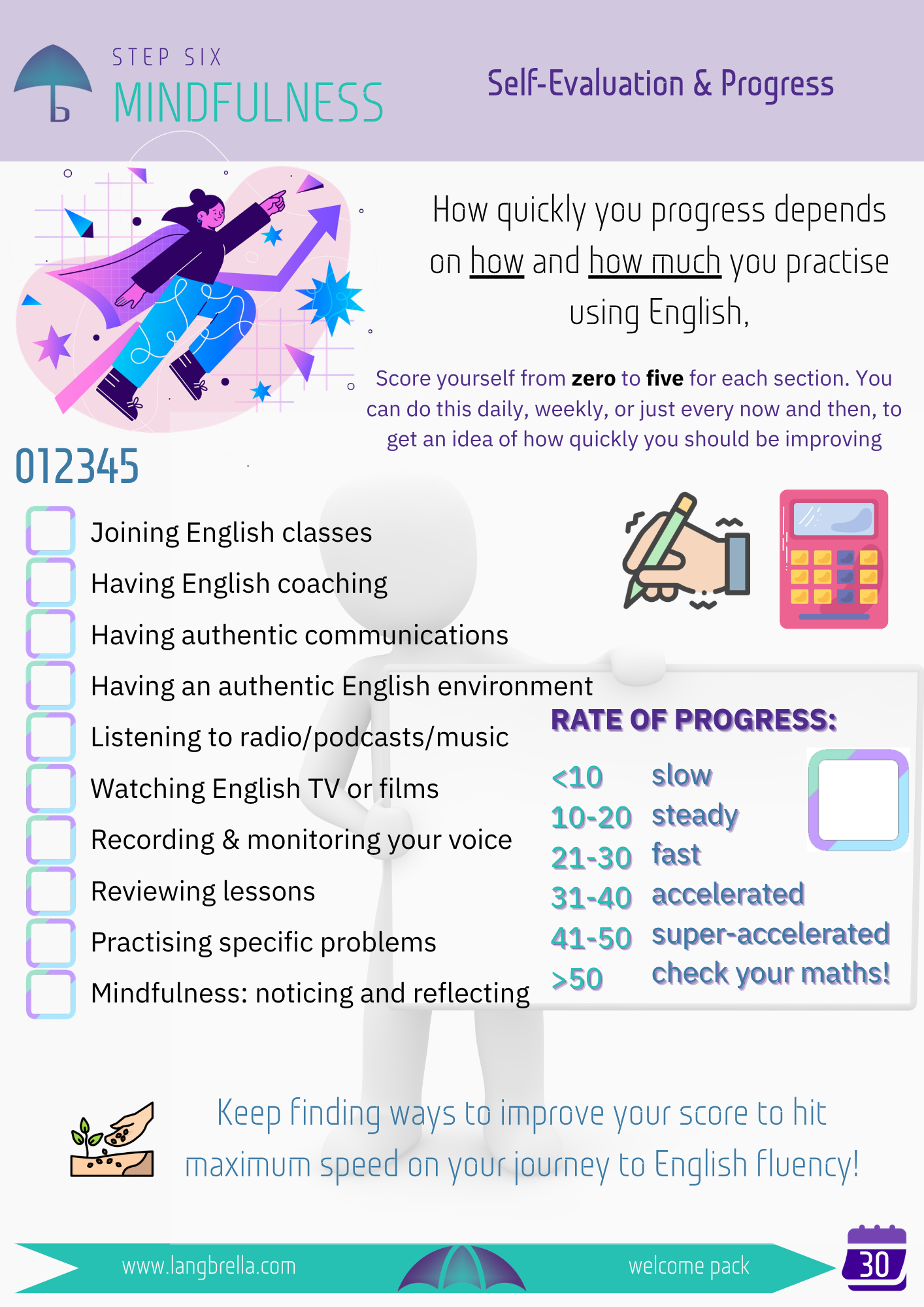
Look back at your previous Rate of Progress score and complete the evaluation again. Has your score changed? Which activities have become more regular or meaningful, and which have received less attention? More importantly, have these changes affected your ability and confidence when using English? What could you adjust this month to make your practice more effective? Remember, a higher score is only useful if it reflects genuinely better learning habits.
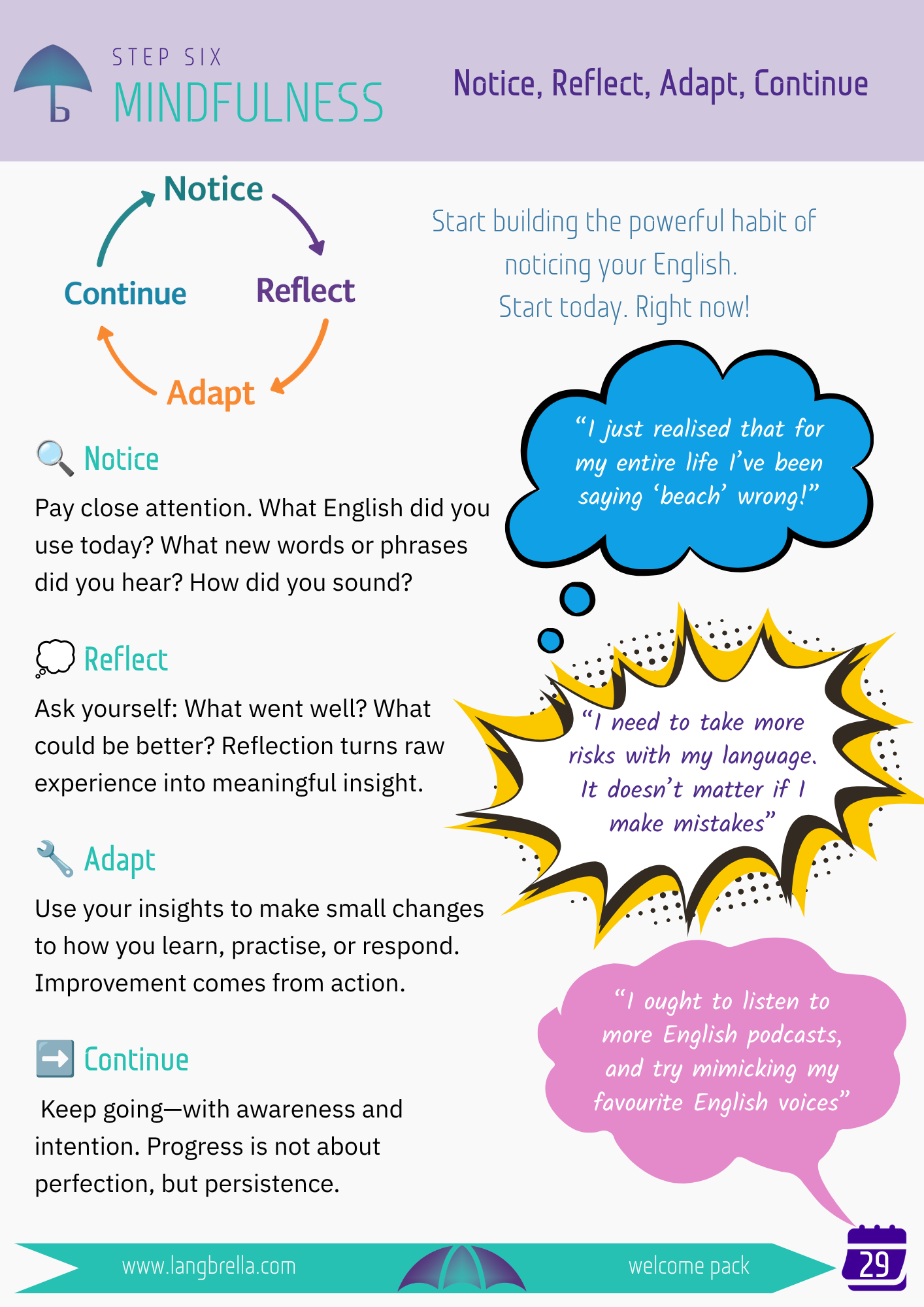
Think back over the past month. What have you noticed about your English that you might previously have overlooked? Did any of those observations encourage you to change how you communicate, learn or practise? Have those changes made a difference? Look back at your earlier reflections and consider how your awareness, confidence and approach to learning are evolving.
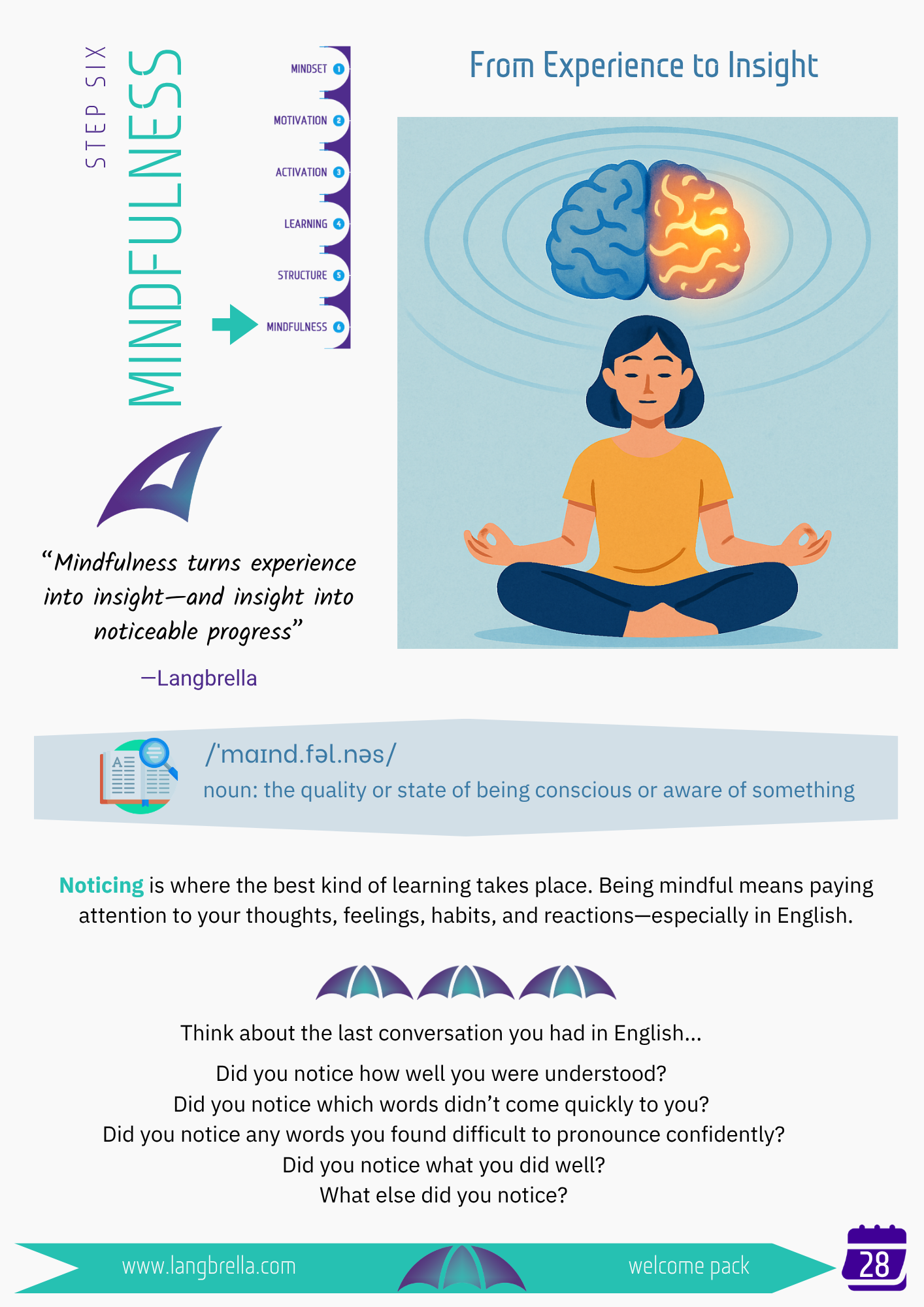
Think about your recent experiences using English. Are you becoming more aware of what happens during conversations—what you do well, where you hesitate, and how other people respond? Have you noticed anything this month that you might previously have overlooked? Compare your observations with those from earlier months. Is your ability to recognise your own strengths and challenges improving?
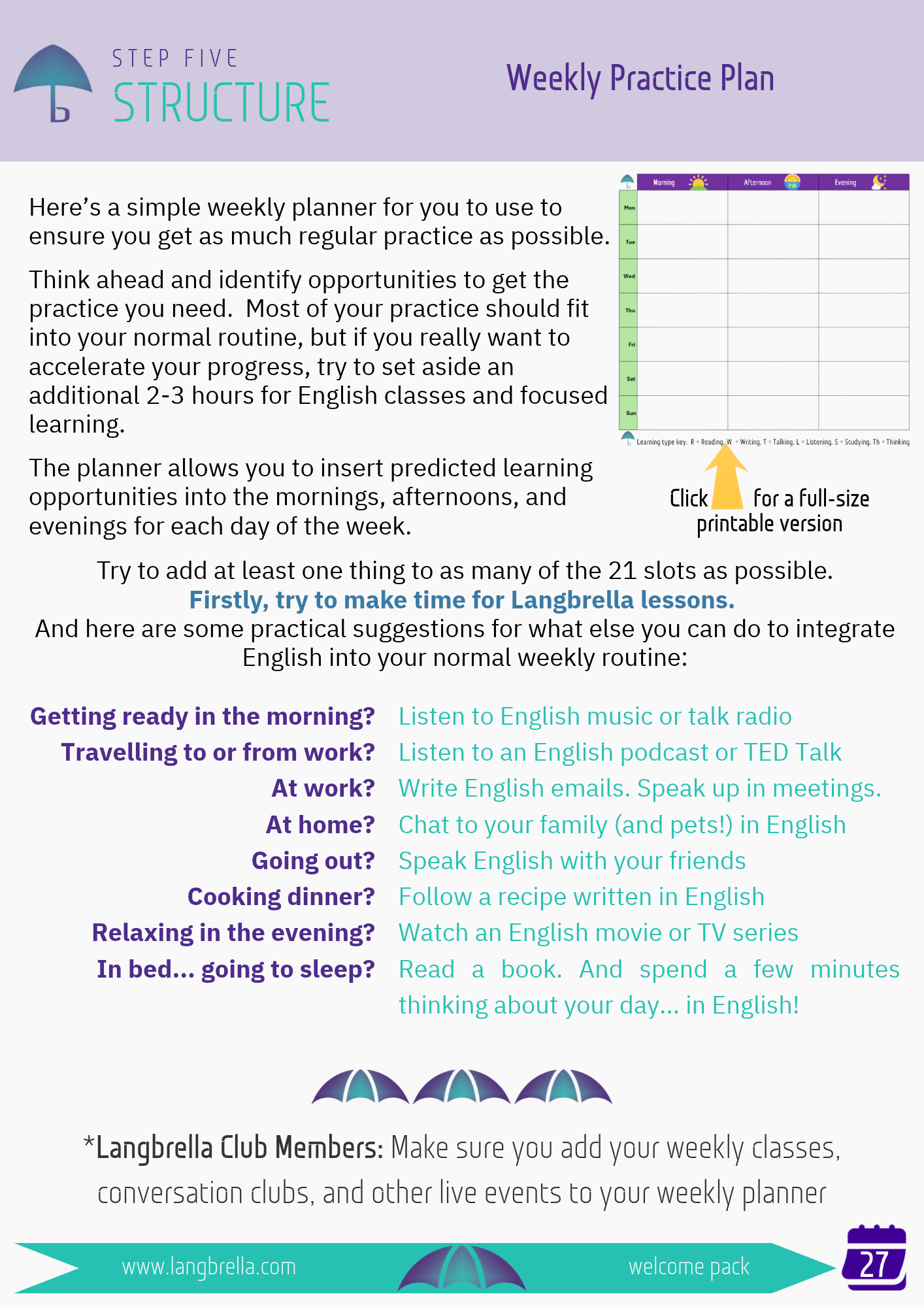
A good English learning routine should fit your life, not take it over! Explore how to turn everyday activities into opportunities to use English, while making time for meaningful practice, lessons and conversations. Use your weekly planner to create a realistic routine that supports your goals and keeps your English moving forward.
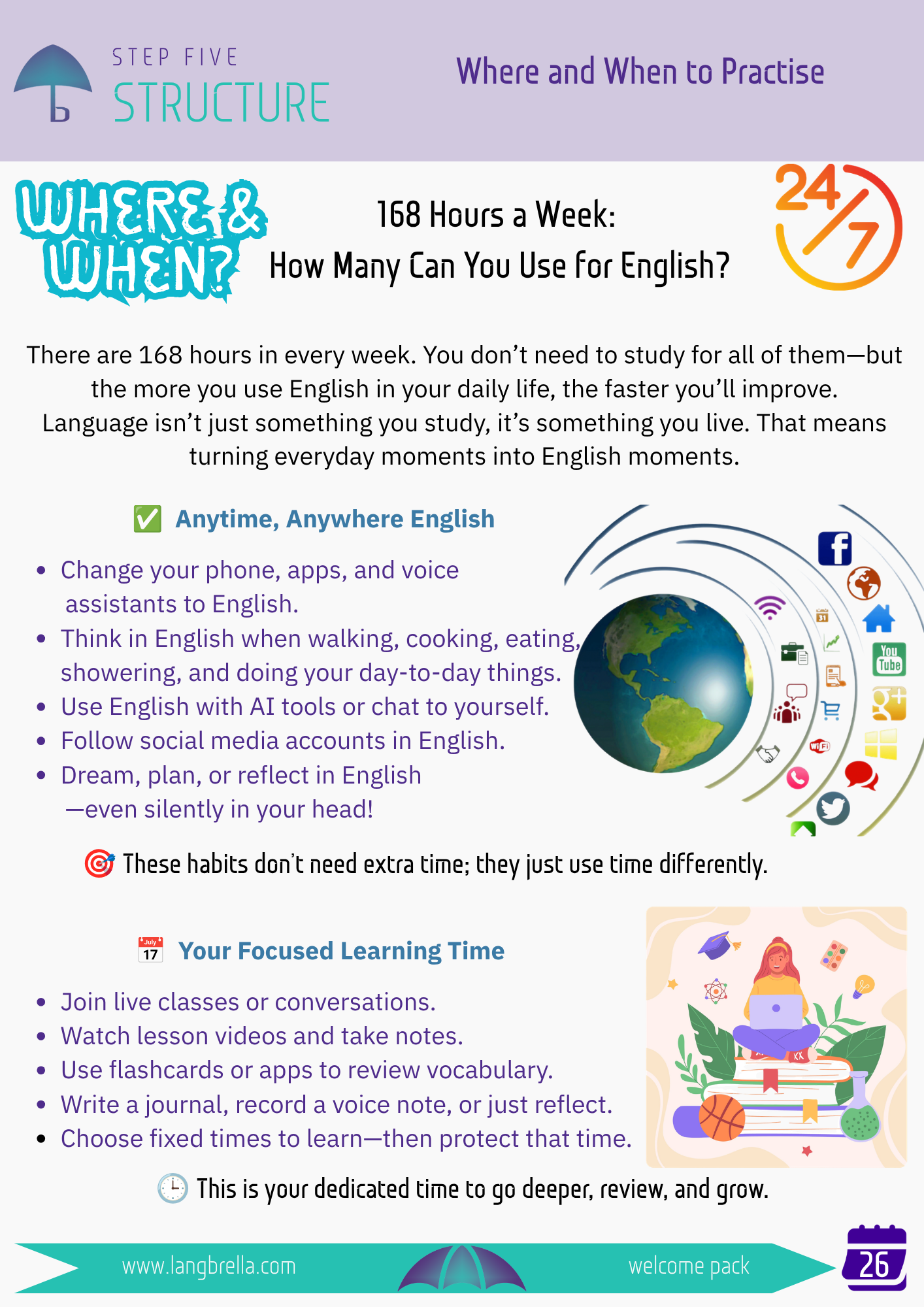
Think about when and where you've used English over the past month. Have you discovered new opportunities within your everyday routine? Are there activities that now feel natural in English, without you deliberately deciding to practise? Have you found a good balance between everyday English use and focused learning time? What small change could help you make better use of the opportunities around you this month?
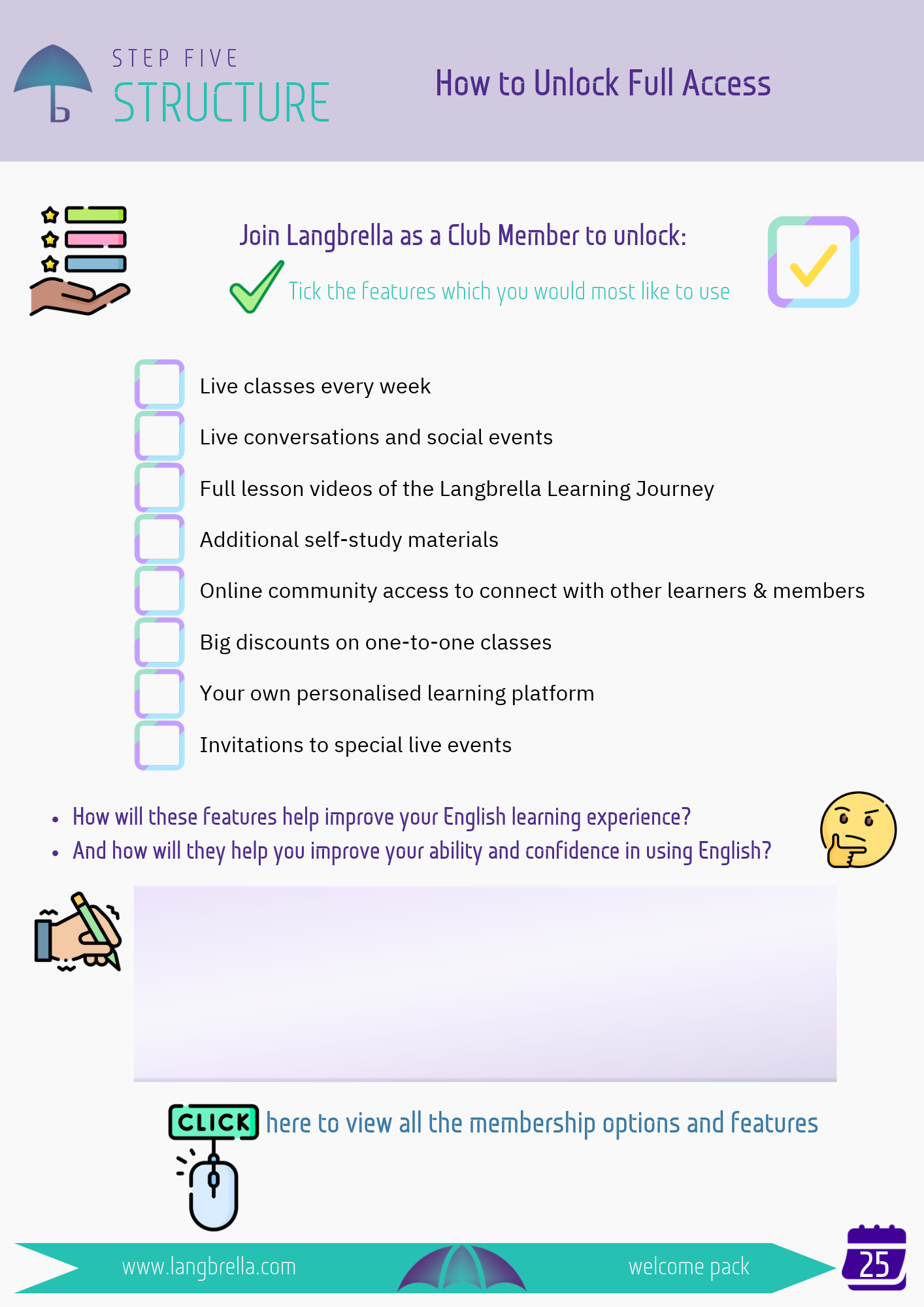
Think about the learning opportunities that interested you when you last visited this page. Have you tried any of them since then? Which experiences have helped you develop your English or become a more confident communicator? Have your needs or preferences changed? Consider what additional support, activities or opportunities might help you make progress this month.
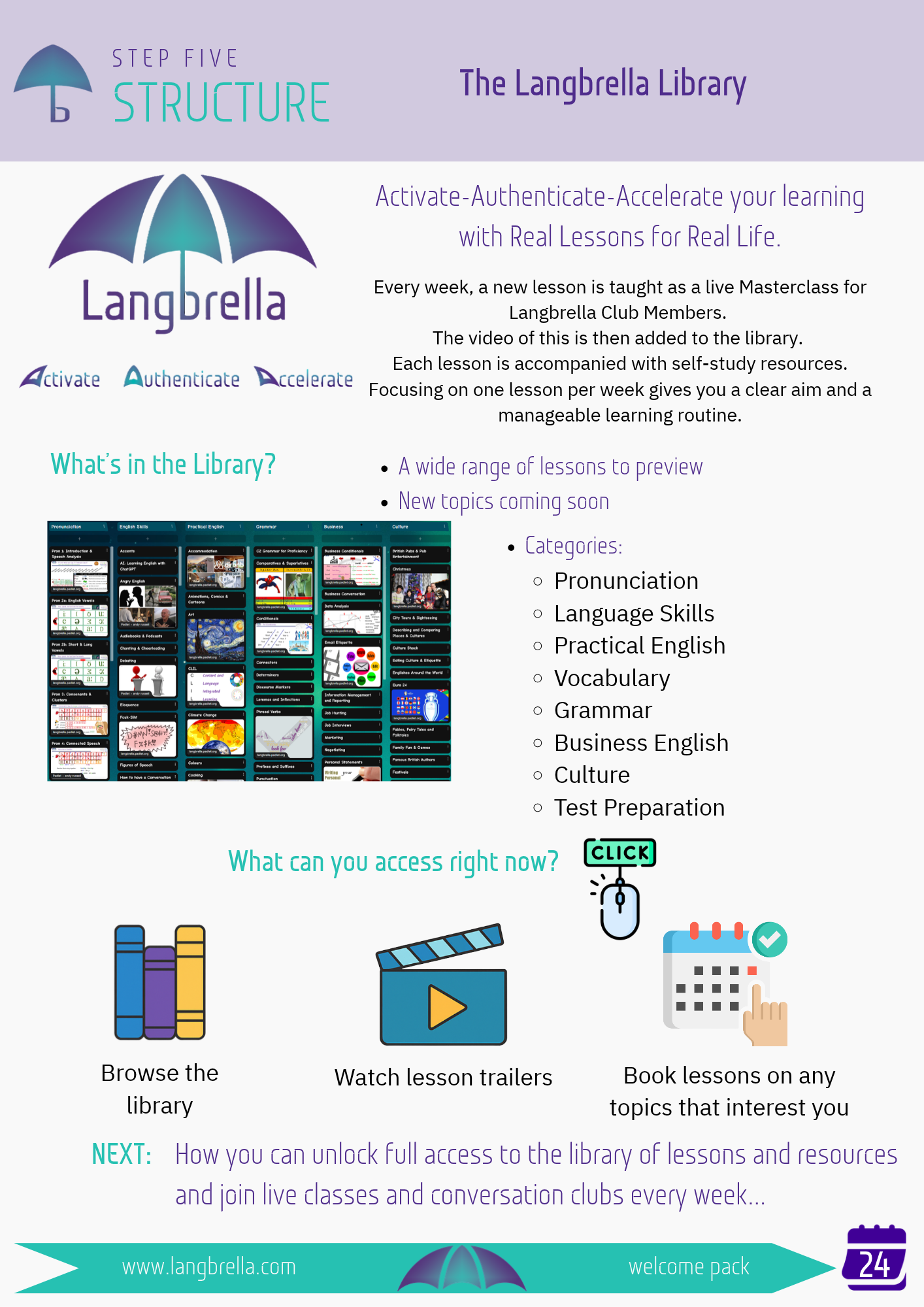
Think about the lessons and resources you've explored since you last visited this page. What have you discovered, and which activities have helped you use English more confidently? Have your interests, needs or learning priorities changed? Is there a topic you've been meaning to explore, or a useful lesson you'd like to revisit? Choose something relevant to your life right now.
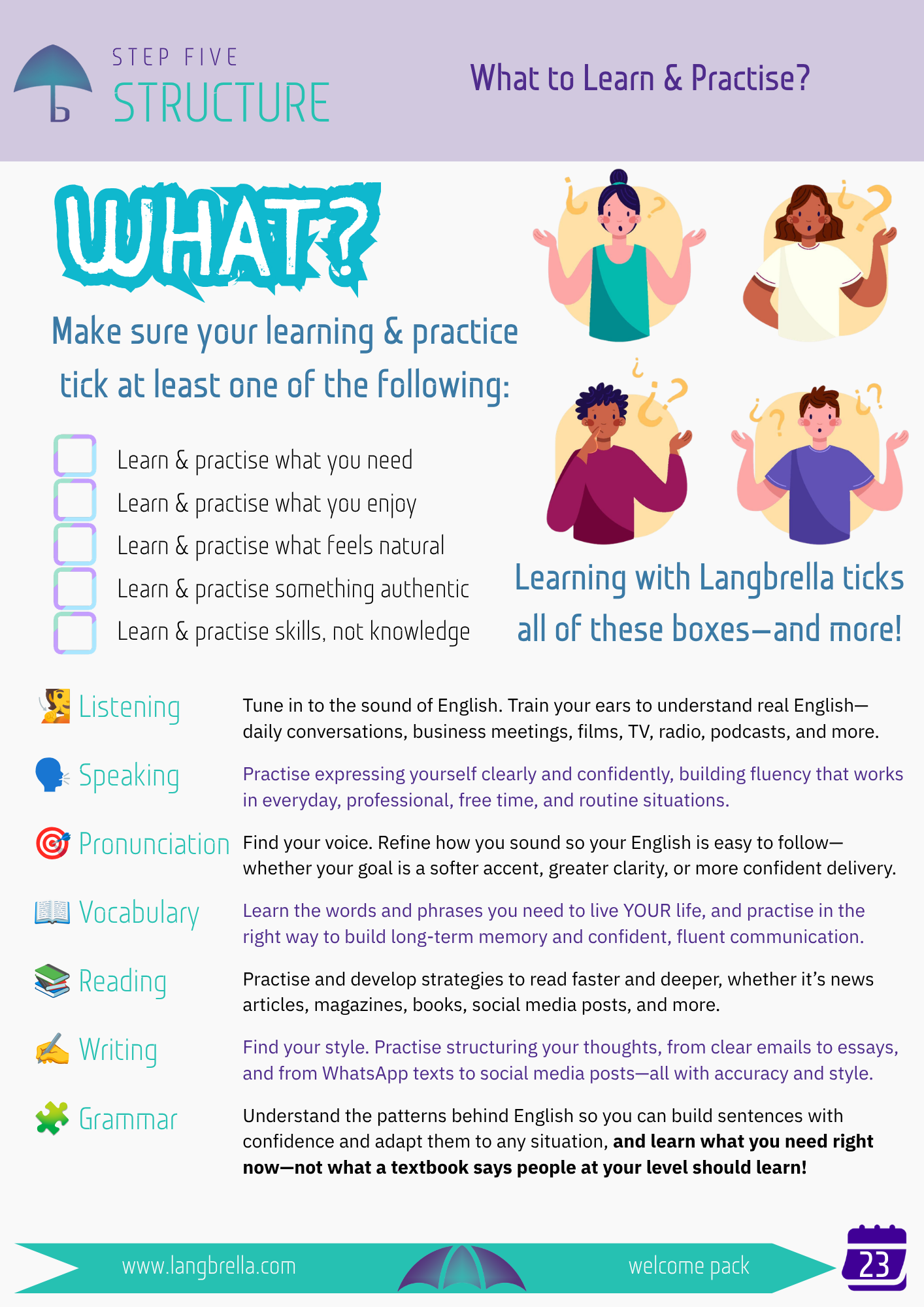
Think about the English skills you've focused on recently. Are they still the ones that matter most to you? Have any become easier or more natural through practice? Perhaps you've discovered a new need, developed a new interest, or realised that something you previously struggled with is no longer a priority. What would you most benefit from learning or practising this month, and why?
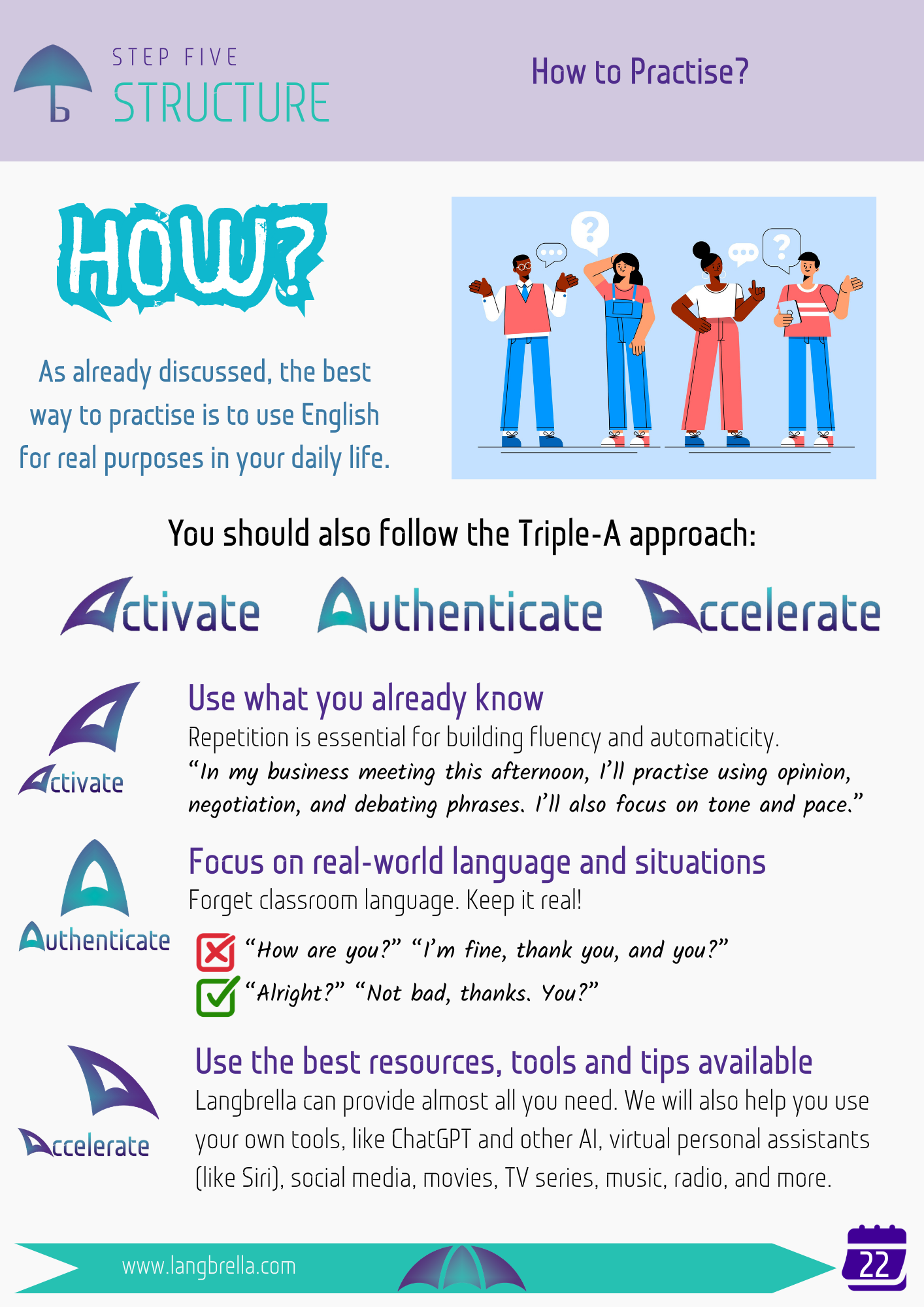
Think about how you've practised English since you last visited this page. Have you found more opportunities to activate what you already know? Have you used English in authentic situations that genuinely matter to you? What resources, tools or feedback have helped accelerate your progress? Consider which aspects of your practice have become more effective, and what you could improve this month.
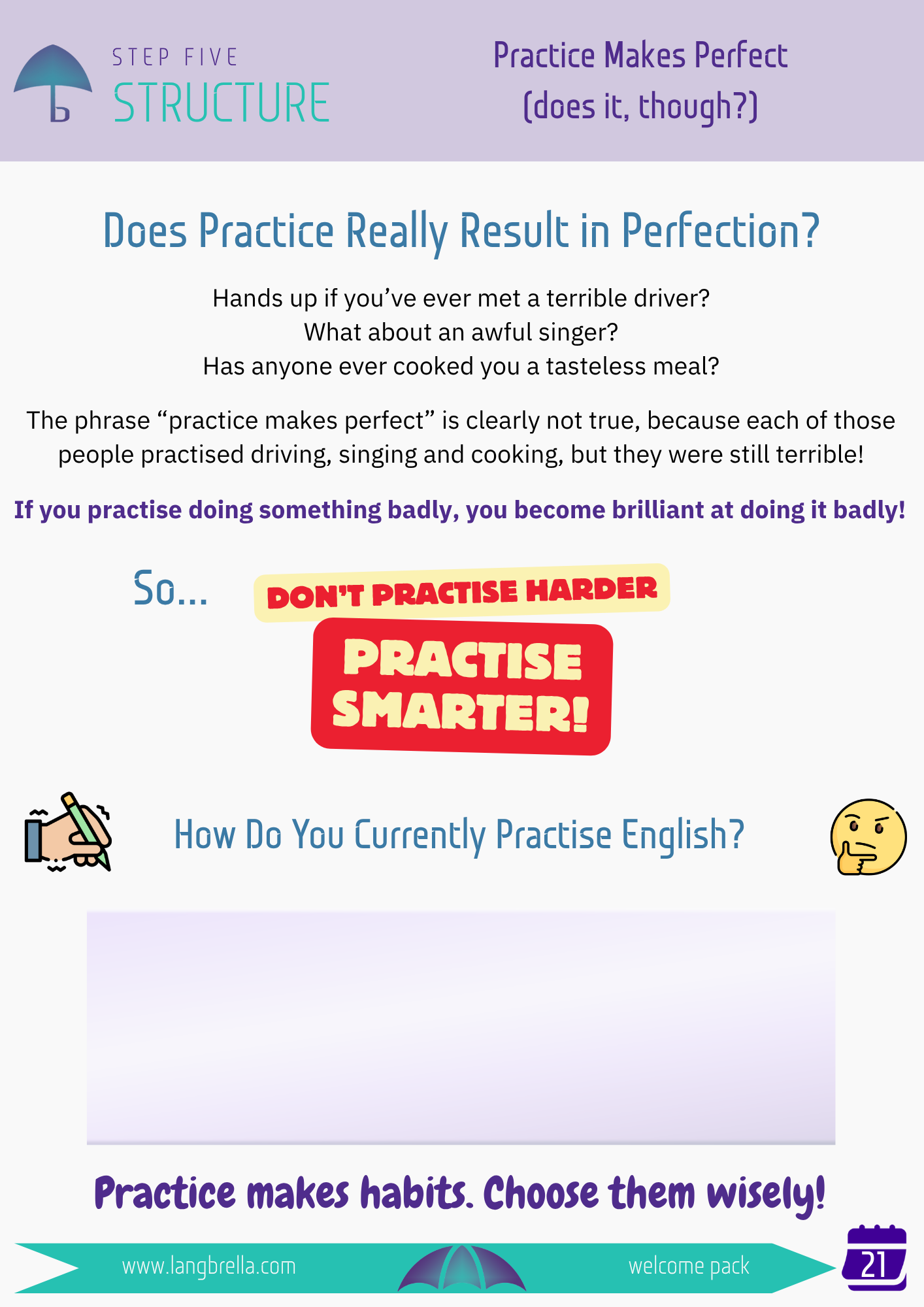
Think about how you've practised English over the past month. Have you simply repeated familiar activities, or have you made deliberate changes to improve your communication? Can you identify something you've been practising in an unhelpful way? What have you learned about the kinds of practice that genuinely work for you? Choose one thing you could practise more intelligently this month.
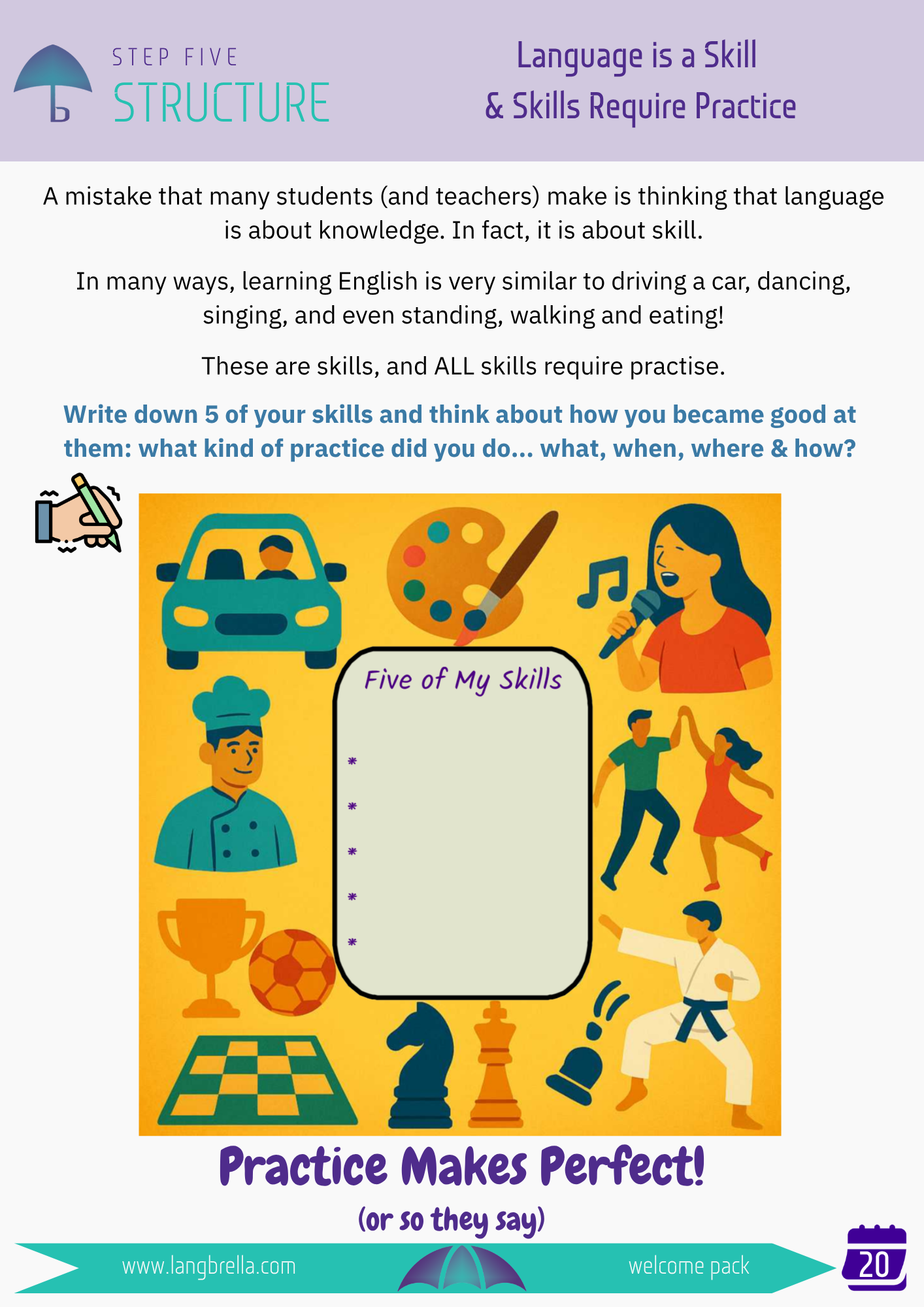
Think about the skills you identified when you first completed this page. What helped you become good at them? Have you applied any of those lessons to your English practice recently? Consider something you can now do in English that previously required much more effort. What helped you develop that ability, and how could you use the same approach to strengthen another skill this month?
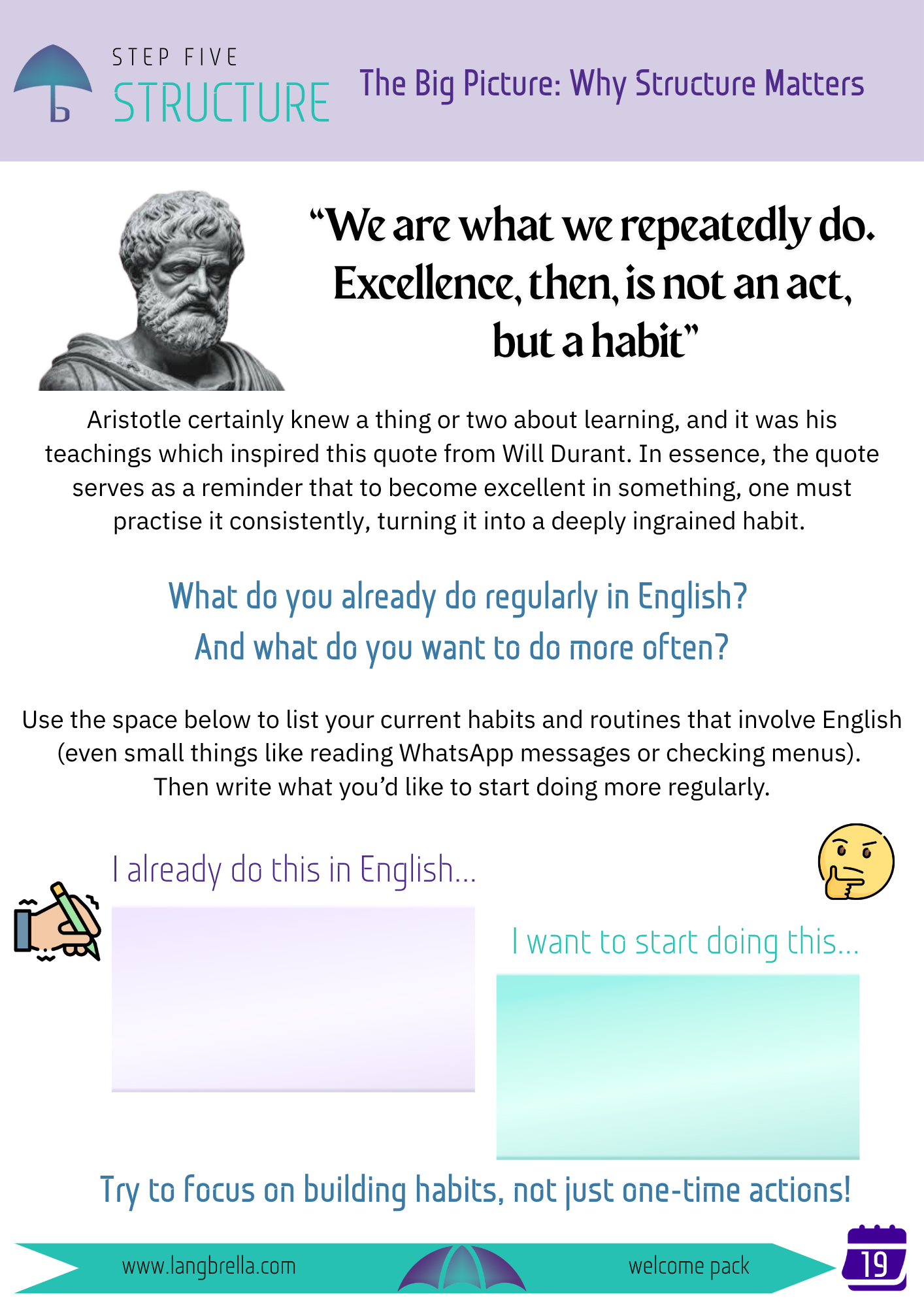
Look back at the English habits you identified last time. Are you still doing those things regularly? Have any activities you wanted to start become part of your normal routine? Perhaps you've discovered new opportunities to use English without setting aside extra study time. Which habits are genuinely helping you progress, and what would you like to introduce, change or stop doing this month?
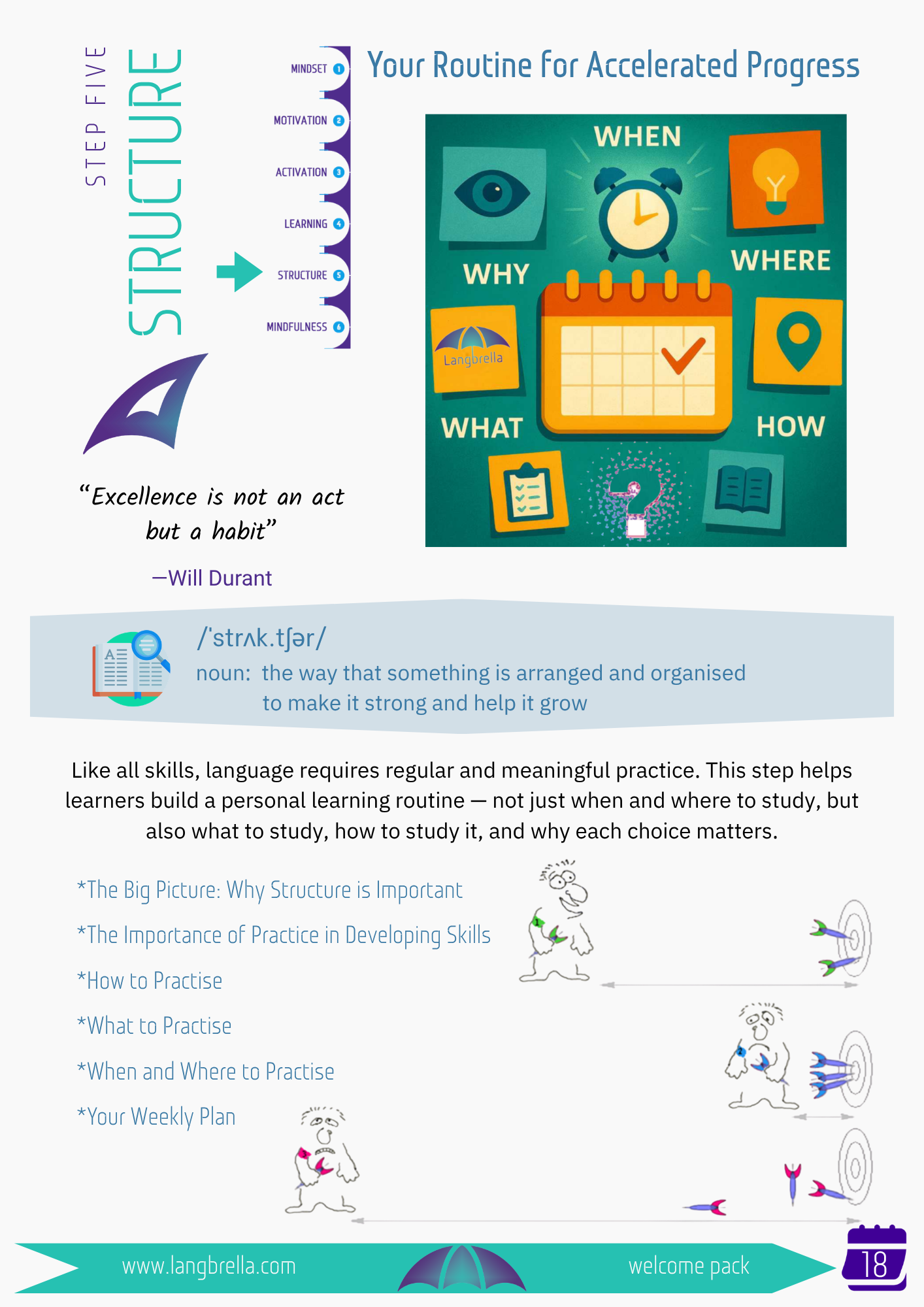
Think about how you've been practising English over the past month. Have you developed any new routines or made changes to existing ones? Which activities have helped you make noticeable progress, and which haven't been particularly useful? Are you practising the English you actually need? Consider one small adjustment that could make your learning routine more effective this month.
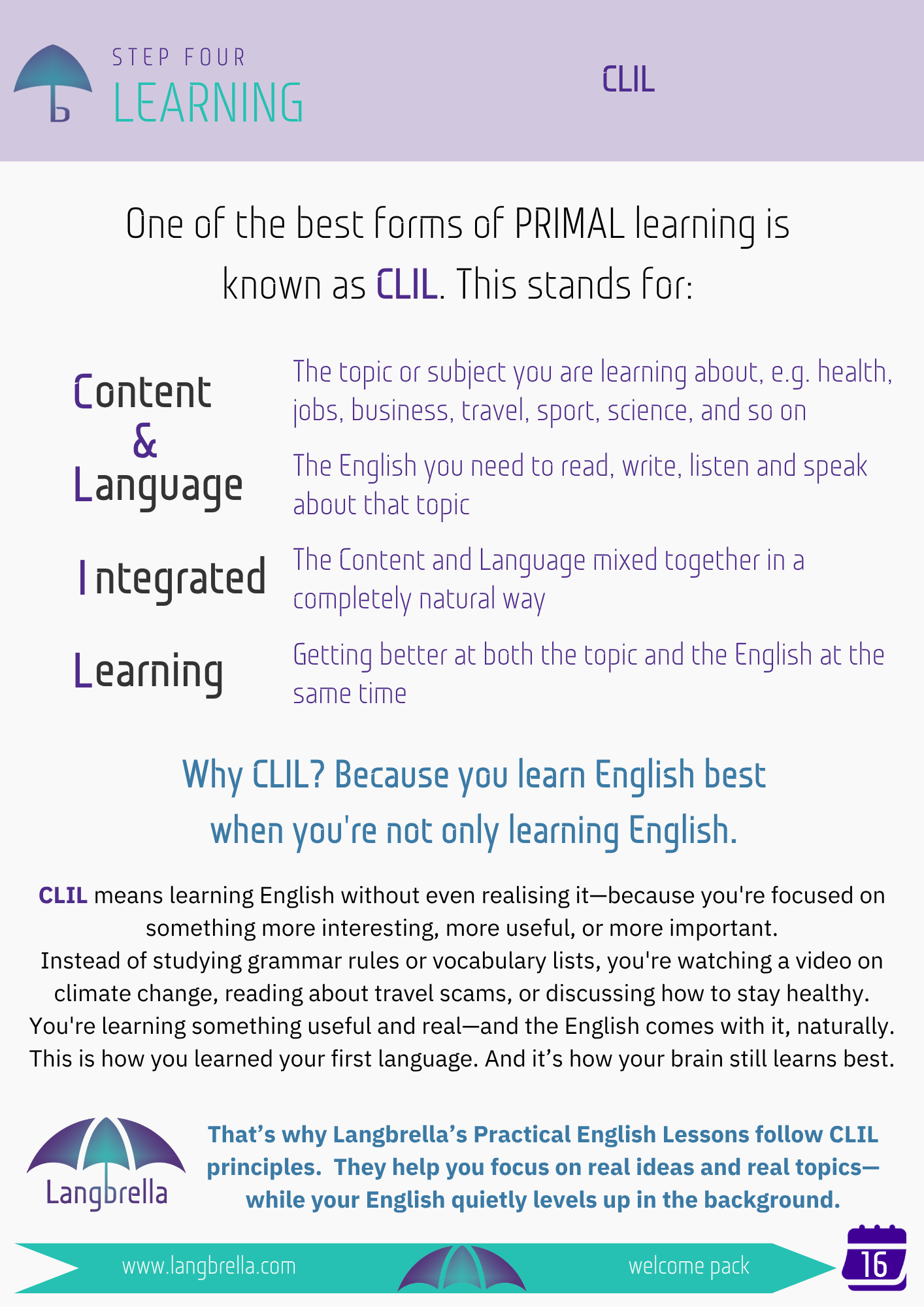
Think about the interesting things you've watched, read, listened to or discussed in English recently. What have you learned about the world, your work or your interests? Did you also pick up useful words, expressions or communication skills along the way? Have your interests changed since you last visited this page? What subject would you love to explore in English next?
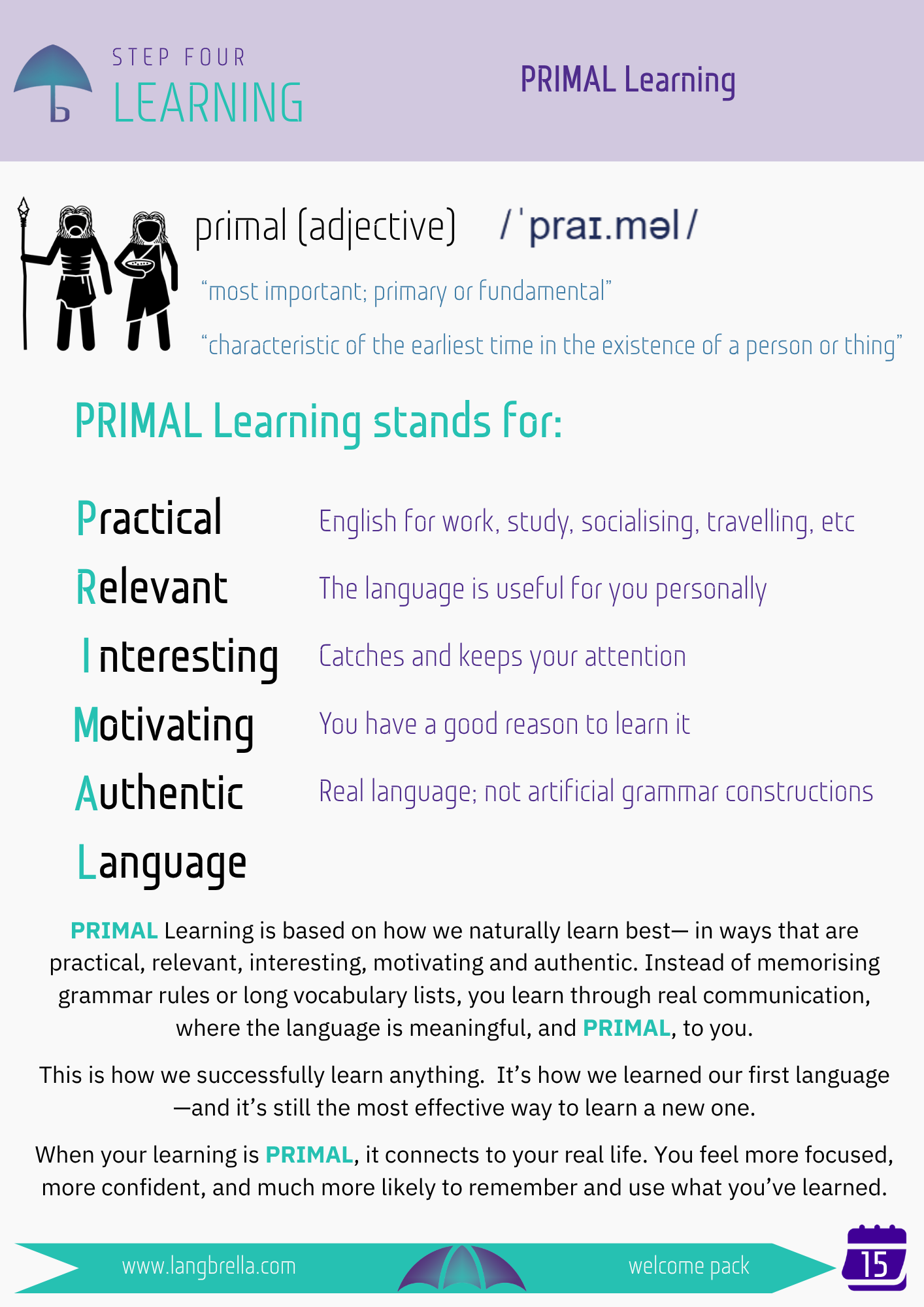
Think about how you've been learning and using English over the past month. How much of it has been practical, relevant, interesting, motivating and authentic for you? Which activities have captured your attention and helped you make progress? Have your interests or priorities changed? What could you do differently this month to make your learning more PRIMAL?
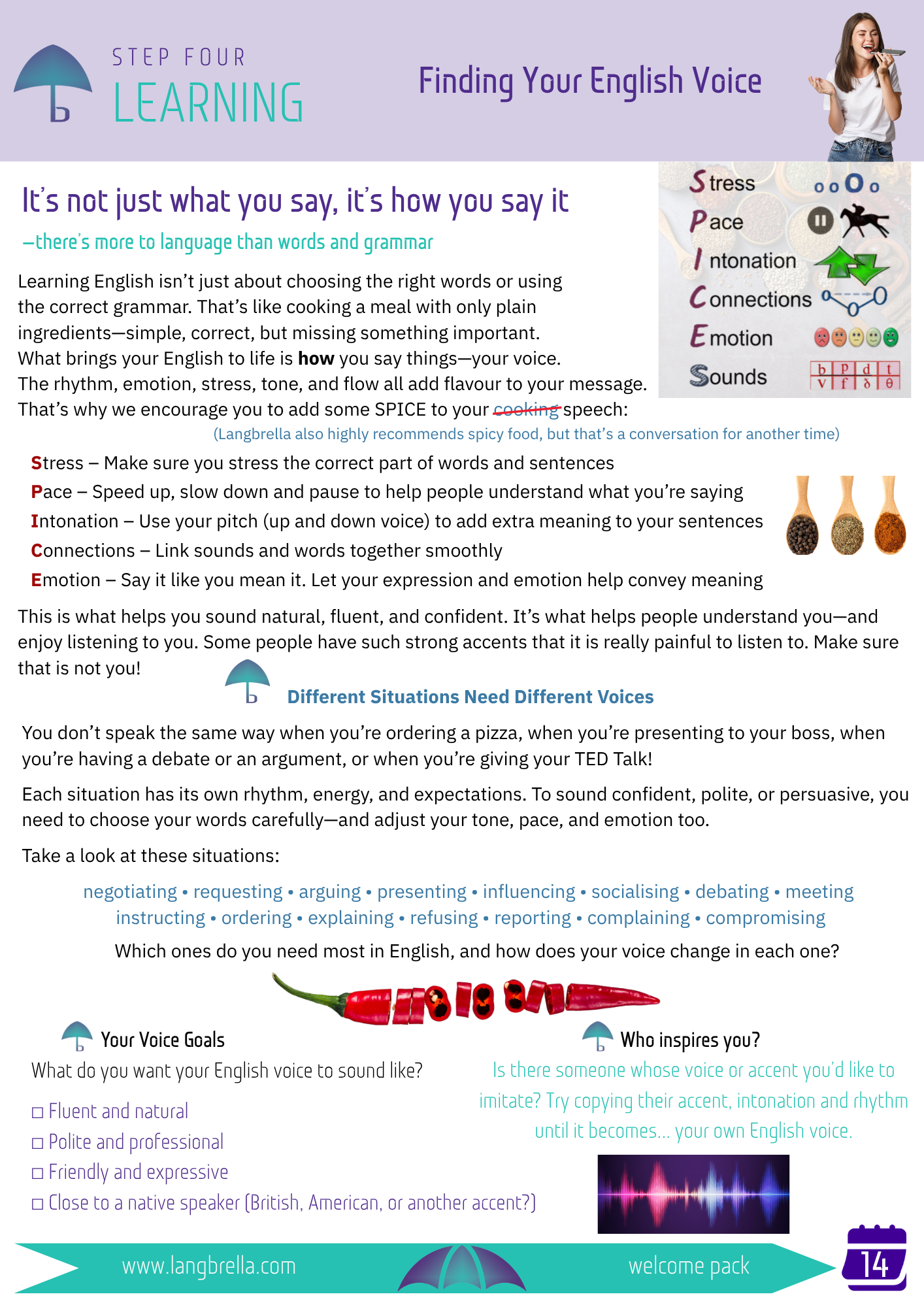
Think about how you wanted your English voice to sound when you last visited this page. Have your goals changed? Have you become more aware of your stress, pace, intonation or emotional expression? Perhaps you've noticed yourself speaking differently in meetings, conversations or social situations. What do you like about your English voice today, and what would you most like to develop next?

Look back at the situations you identified previously. Have you used English in any of them since then? Were you able to communicate as successfully as you hoped? Have any situations become easier, less important or more challenging? Think about what's coming up in your life this month. Are there new conversations or experiences you'd like to prepare for?
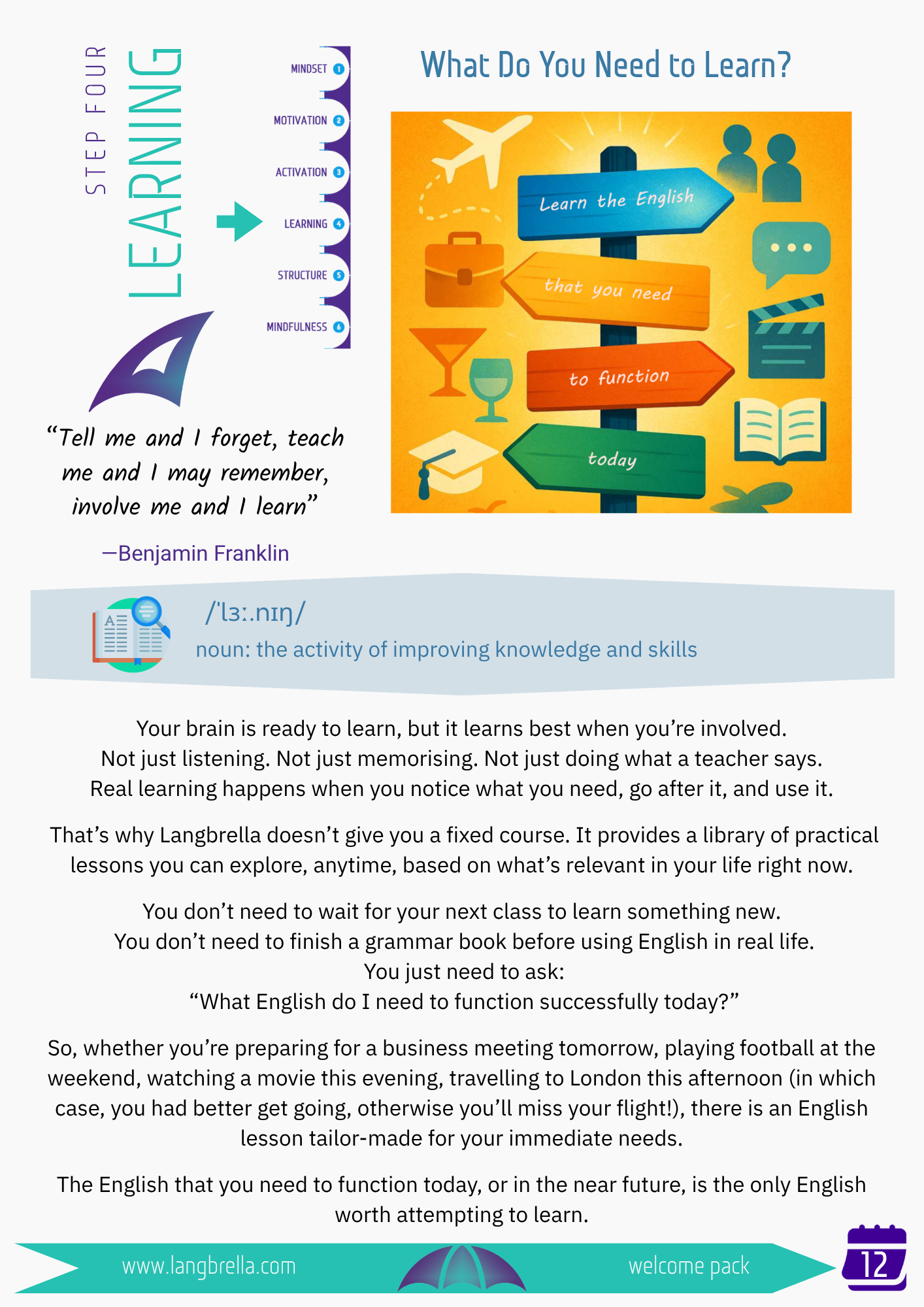
Think about the English you needed most when you last visited this page. Are those needs still important, or have your circumstances changed? Have you successfully handled situations that previously felt challenging? What conversations, activities or responsibilities are coming up in your life, and what English would help you manage them more confidently? Let your current needs guide your next steps.
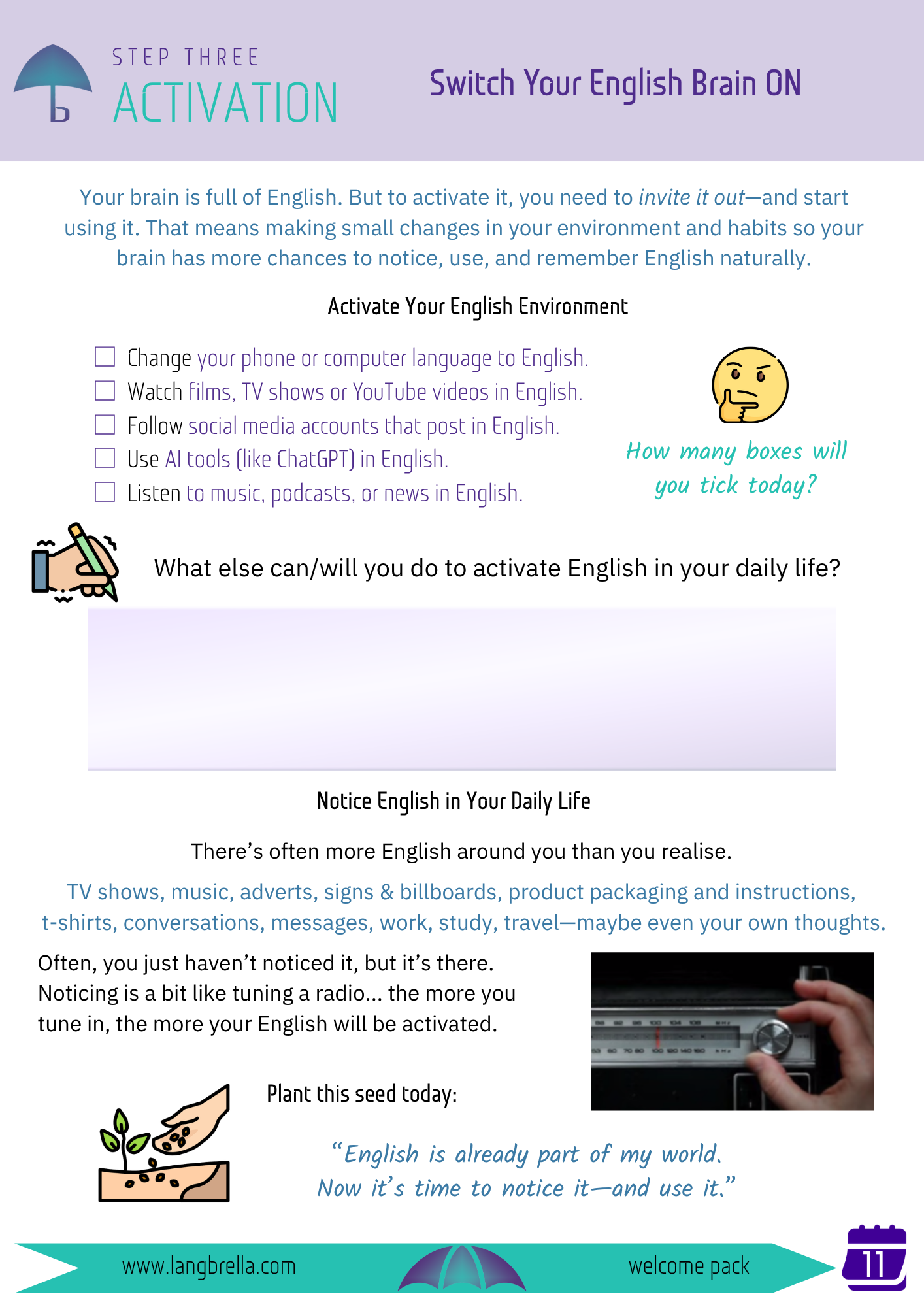
English is already part of your world—perhaps more than you realise. Discover simple ways to activate your English environment, from changing everyday habits to noticing the language around you. You don't always need more time to practise. Sometimes you just need to use your time differently.
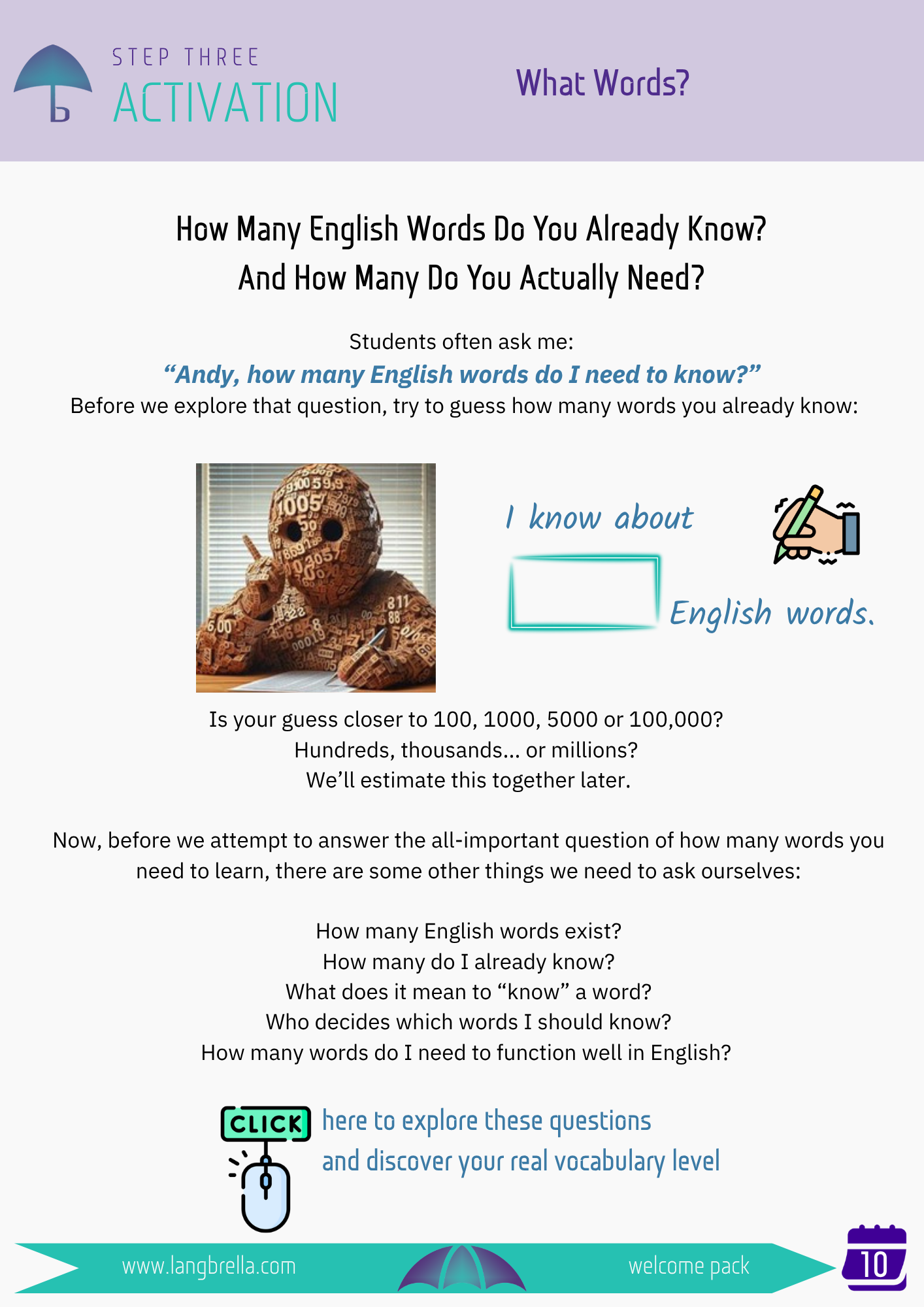
Look back at your previous estimate of how many English words you know. Would you give the same answer today? Have you discovered words you already recognised but rarely used, or started using familiar vocabulary in new situations? Think about which words and expressions have become genuinely useful to you recently. Has your understanding of what it means to 'know' a word changed?
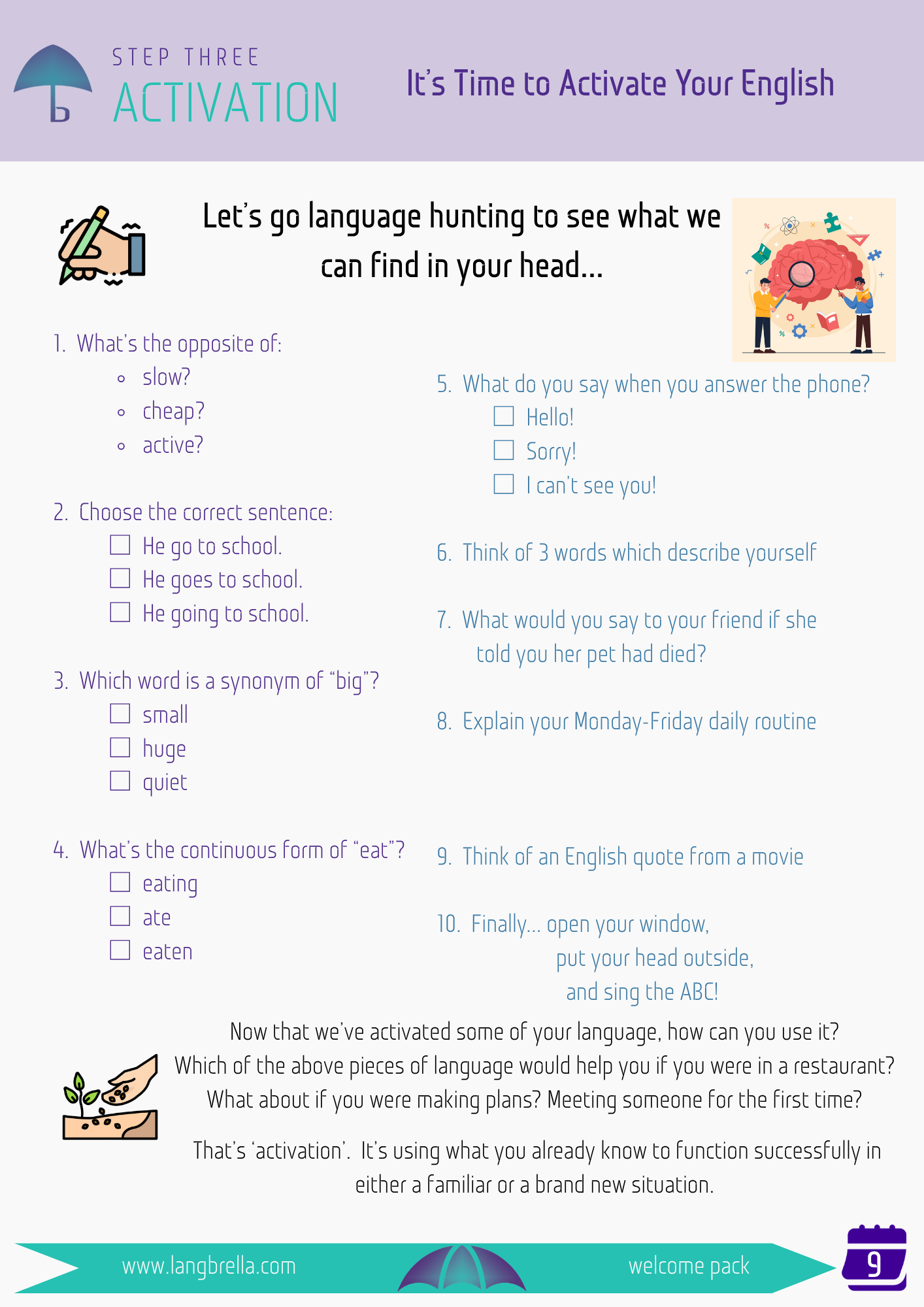
Try these activities again without looking at your previous answers. Did anything feel quicker, easier or more natural this time? Did you think of different words or responses? Notice which parts of your English are becoming more automatic, and consider how you could use those skills in real conversations this month.
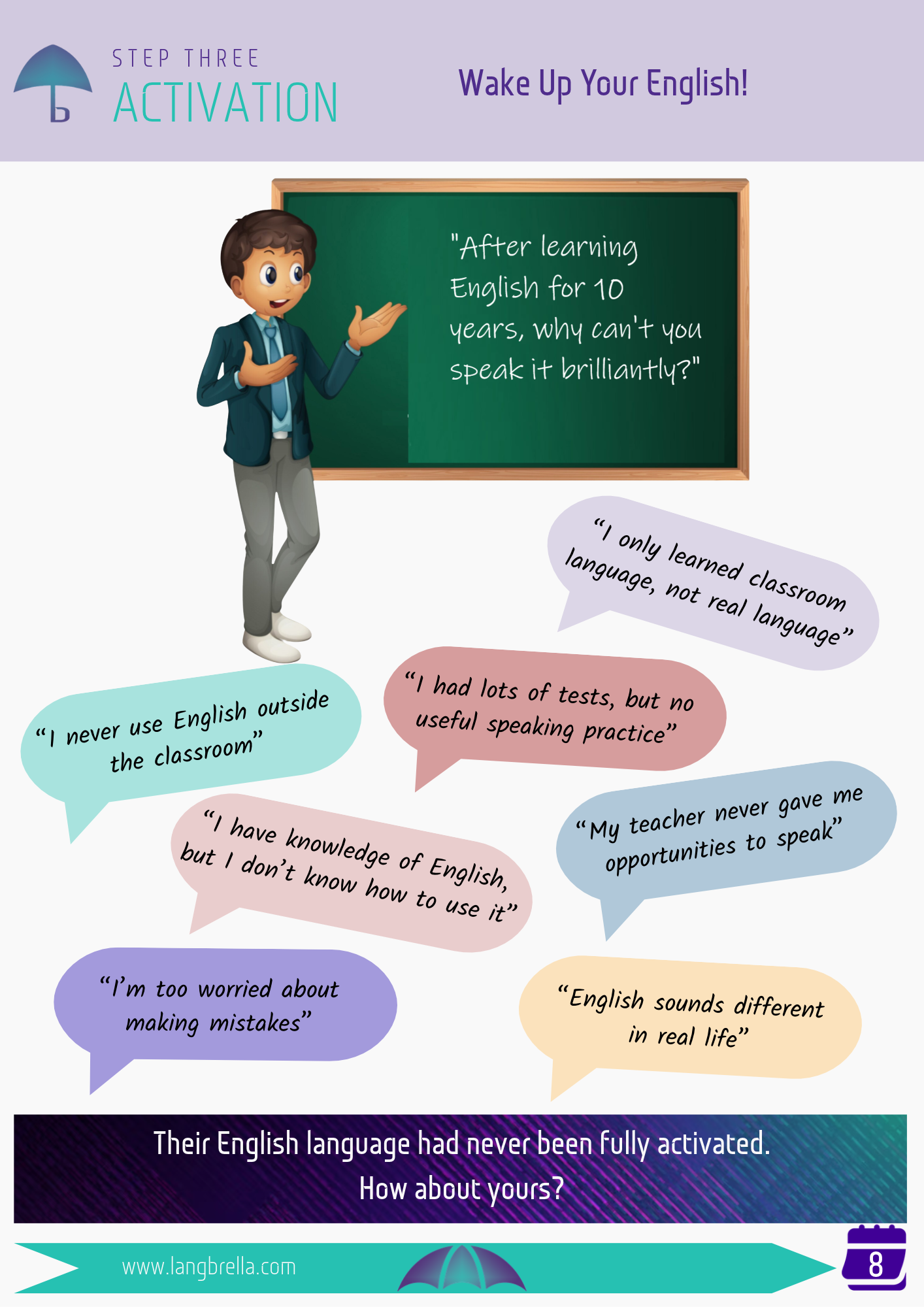
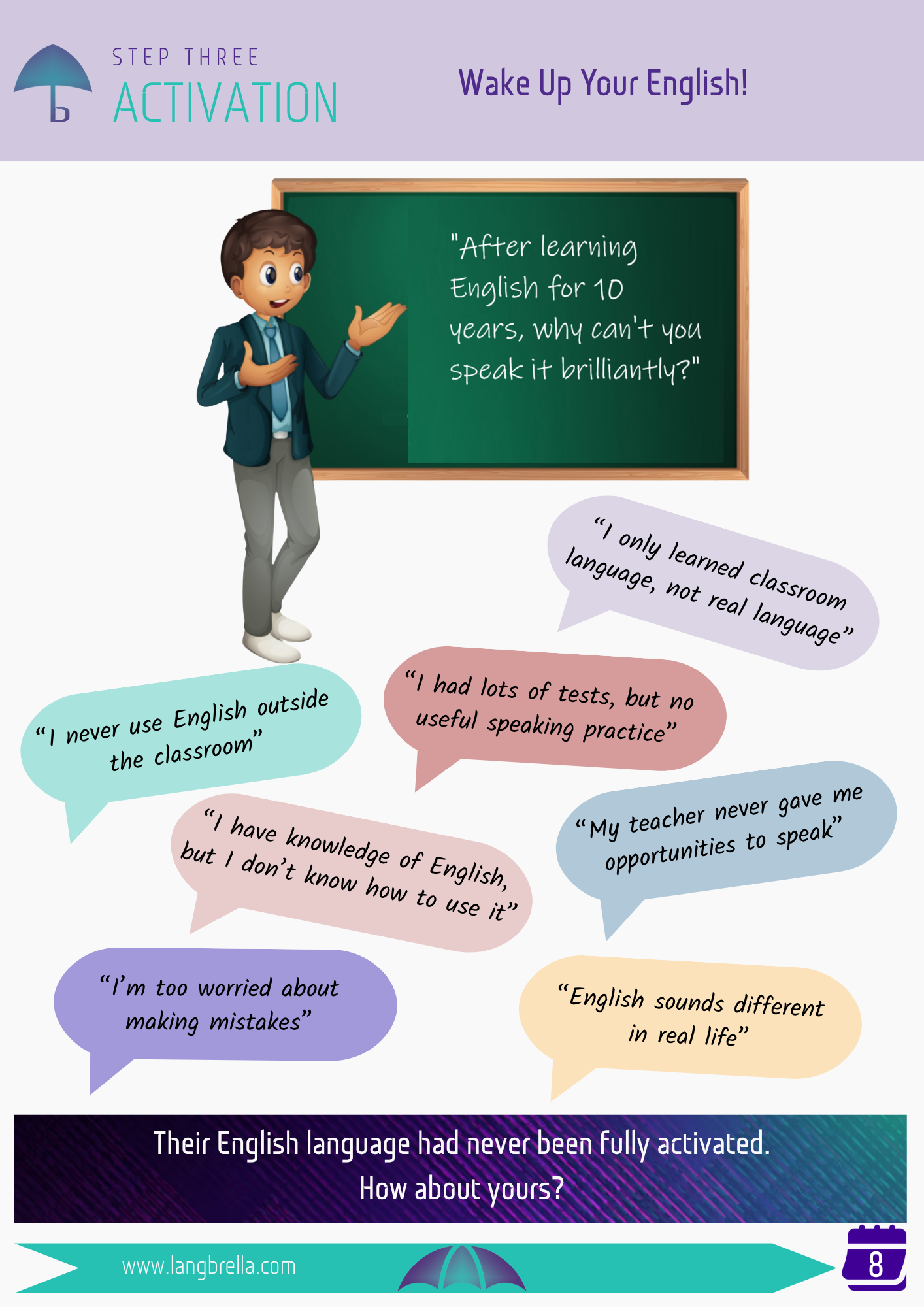
Look again at the reasons these students struggled to use English. Which ones sounded familiar when you first read them? Do they still apply to you today? Have you become more willing to speak, take risks or make mistakes? Think about one barrier you've overcome—and another you could work on breaking down this month.
Think about how you've used English over the past month. Have you spent more time studying it or actually communicating with it? Has that balance changed since you last visited this page? What opportunities have you created to put your existing English into practice, and what could you do differently next month?
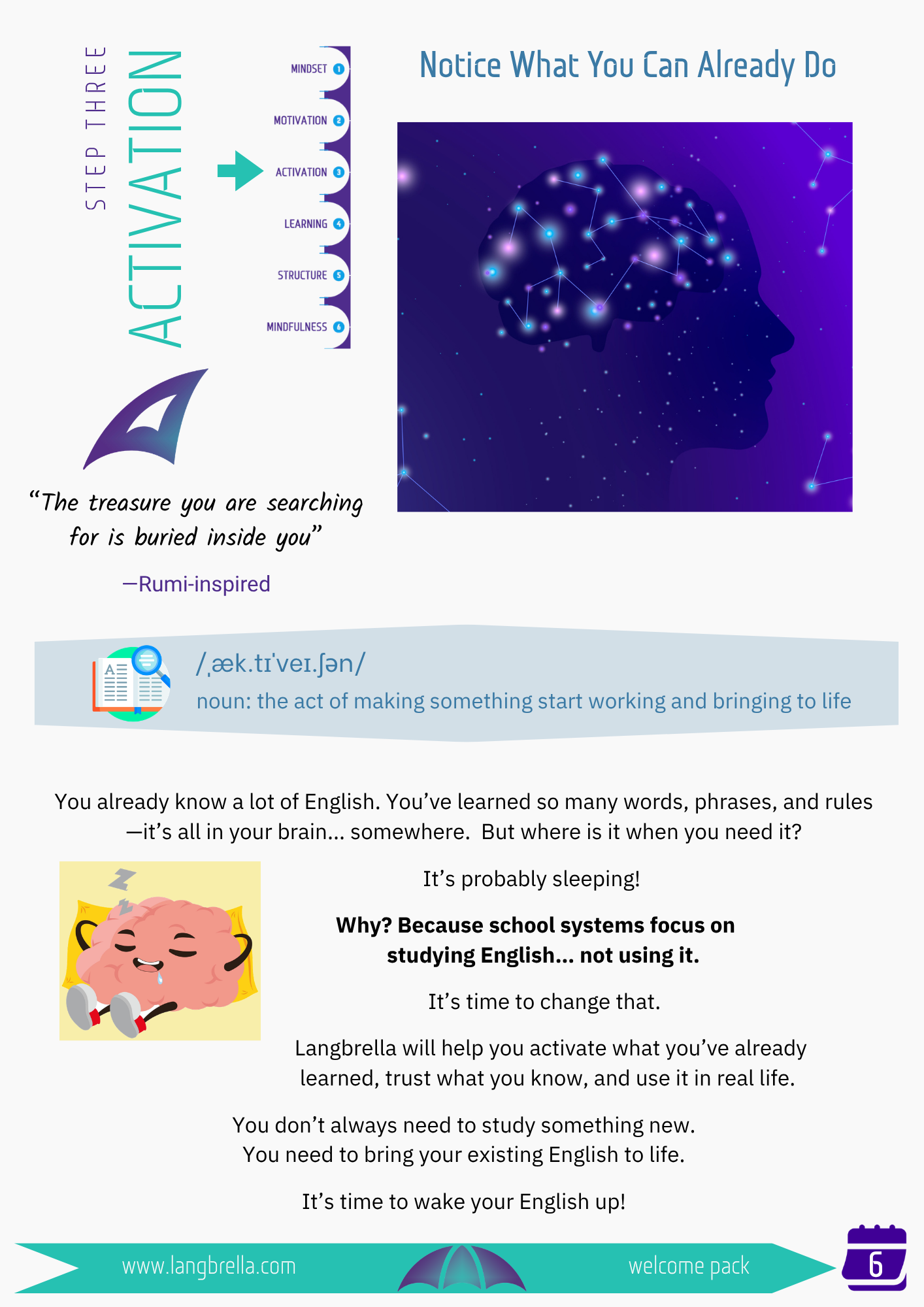
Think back over the past month. Have you used any English that surprised you—perhaps a word you hadn't used for years, a conversation you managed successfully, or something you understood more easily than expected? What abilities are you beginning to recognise that you previously overlooked? Are you becoming more confident in using what you already know?
Look back at the motivation mantra you wrote previously. Does it still inspire you, or would you change it today? Have any of the opportunities you imagined started to become reality? What new goals, experiences or circumstances are shaping your motivation now? Consider whether it's time to plant some new seeds.
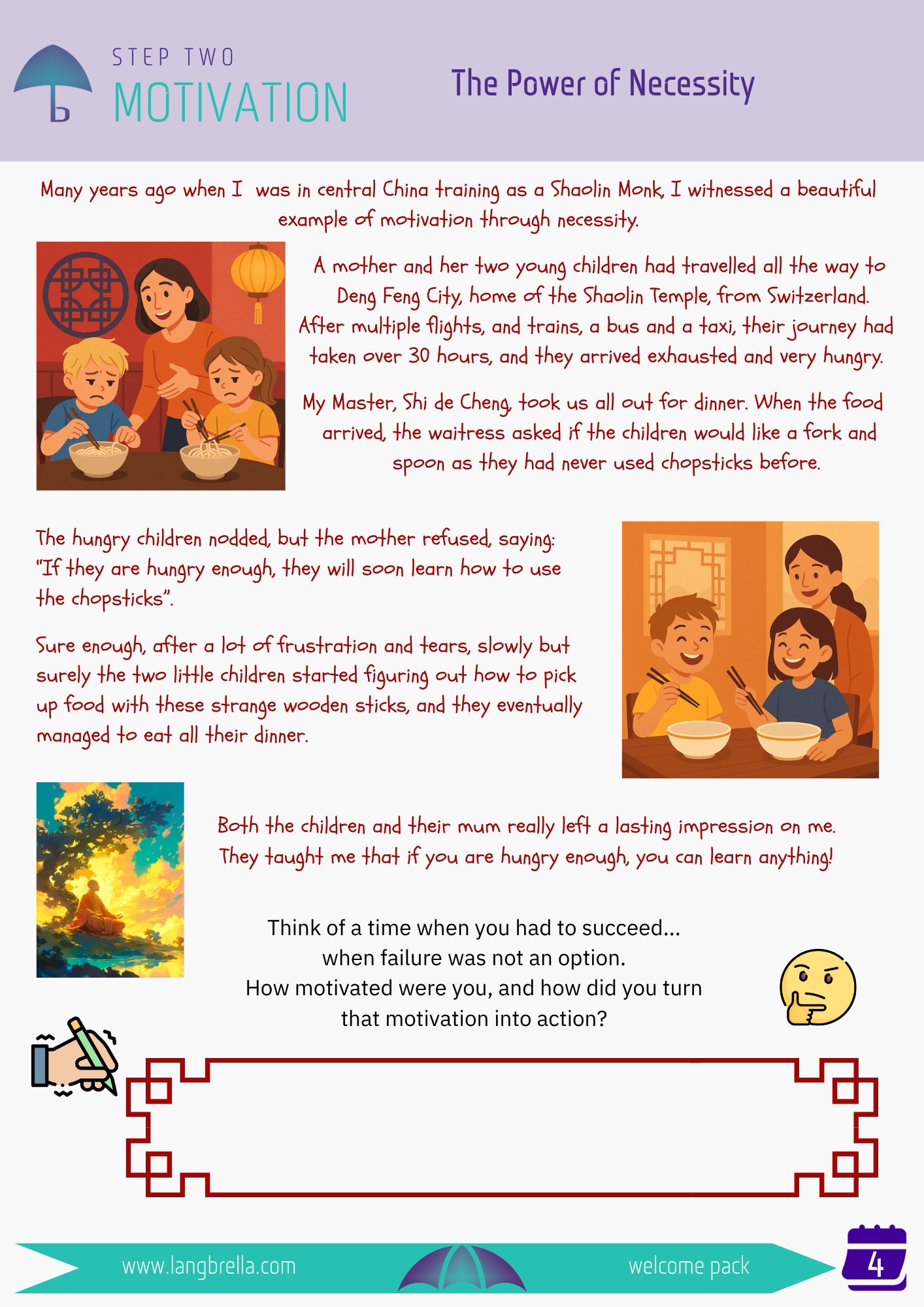
Think about a situation this month when you really needed to use English. Did that sense of necessity help you overcome difficulties or find confidence you didn't know you had? Compare it with your previous experiences. Are you becoming more willing to take risks, solve problems and use the English you already know?
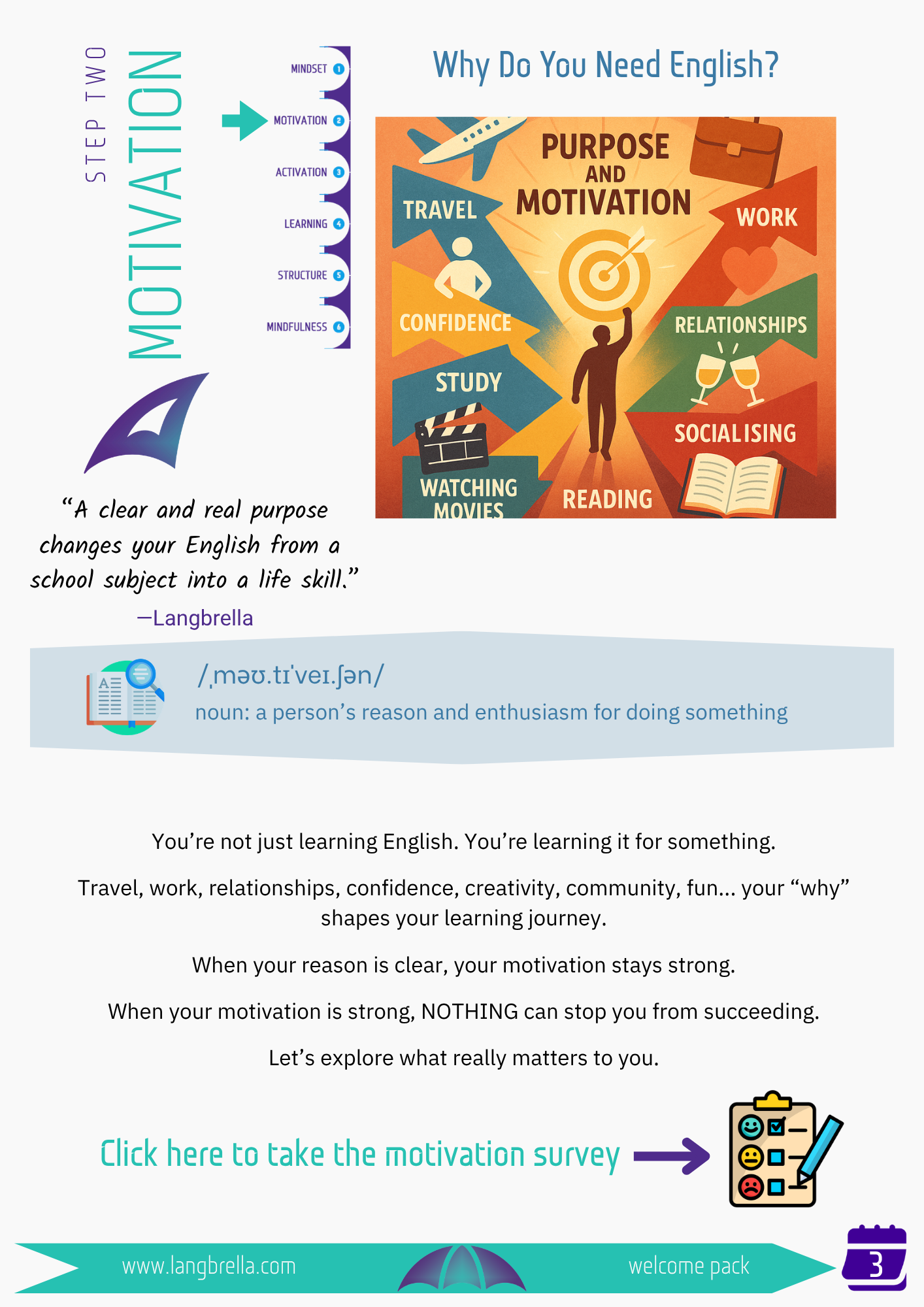
Think about why you wanted to improve your English when you last visited this page. Are those reasons still important to you? Have you discovered new motivations, achieved any of your goals, or changed your priorities? What matters most to you now, and how might that influence what you choose to learn next?
Look back at what you wrote last time. Did you follow through on your promises to use English more often? Which situations made you feel like a real English speaker? Have you become more confident, or discovered new challenges? What small promise could you make to yourself this month?
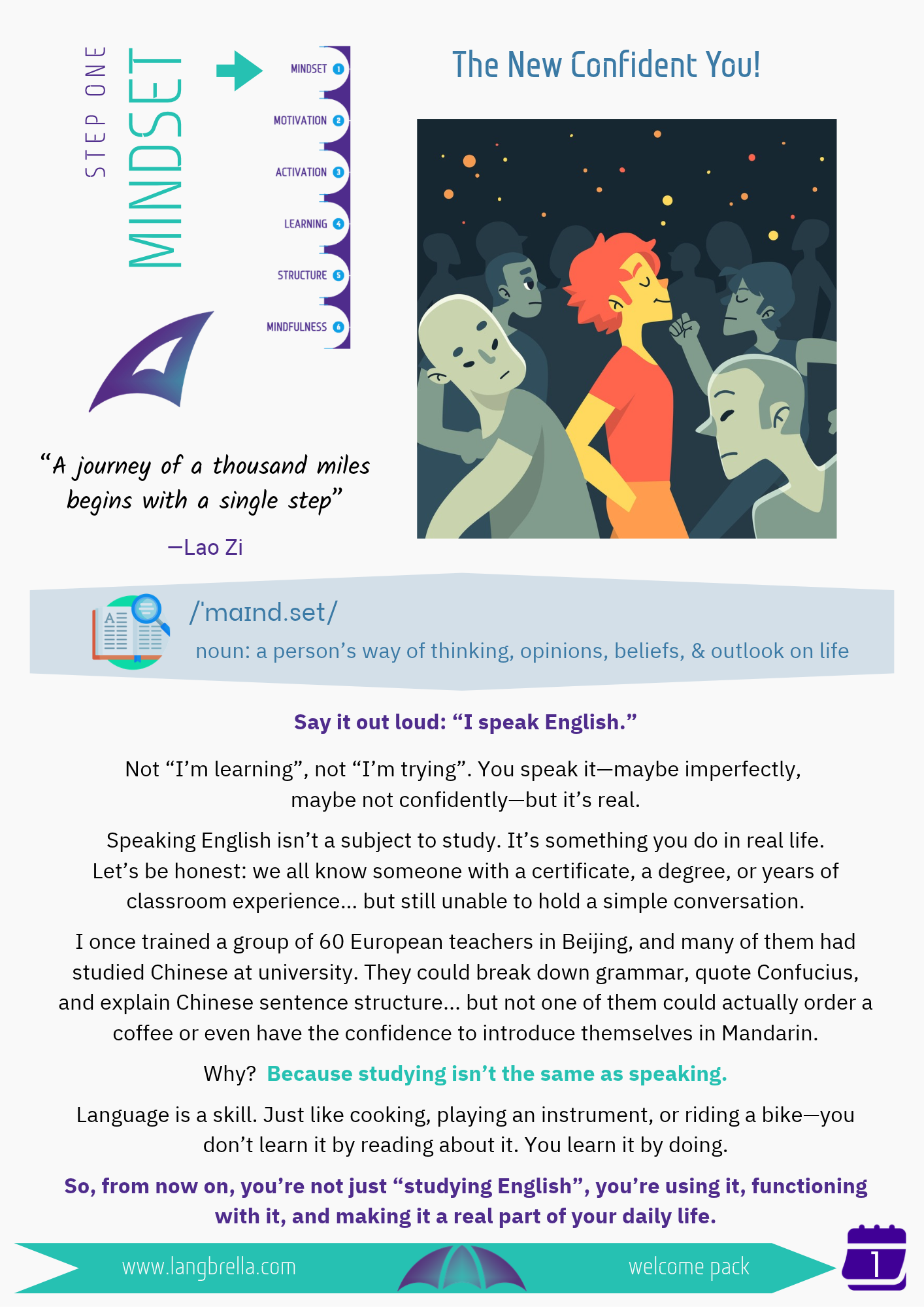
Think back to when you first read this page. Did you consider yourself an English speaker then? Do you feel any differently today? What experiences have helped you feel more confident using English? What still holds you back? Remember, confidence doesn't mean speaking perfectly. It means recognising what you can already do.
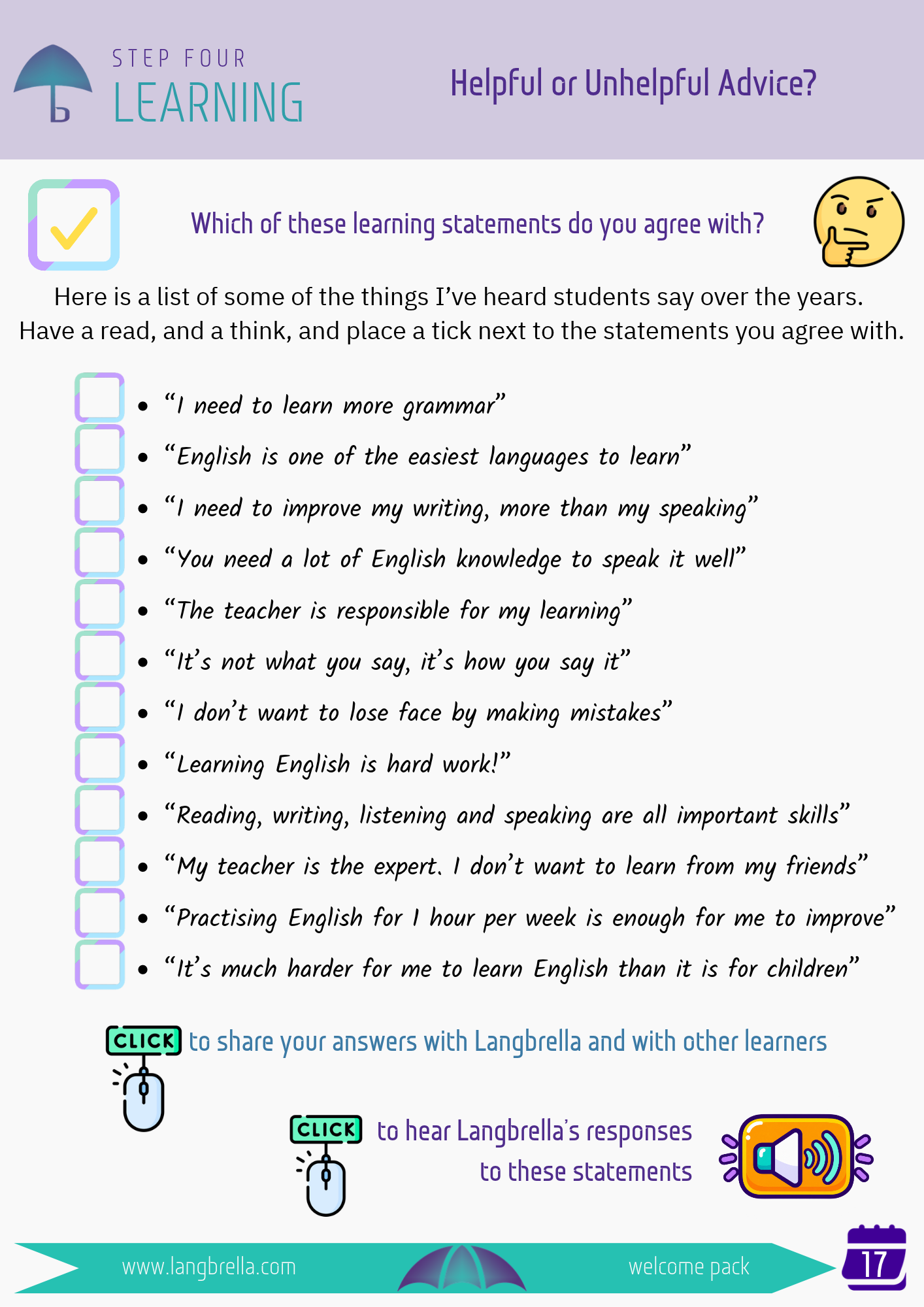
Have you explored these statements before? Look back at your previous answers. Do you still agree with the same statements? Have any of your opinions changed? What experiences or discoveries might explain those changes? Remember, changing your mind can be a sign of progress!