

The Unprecedented Rise of Unpresidented
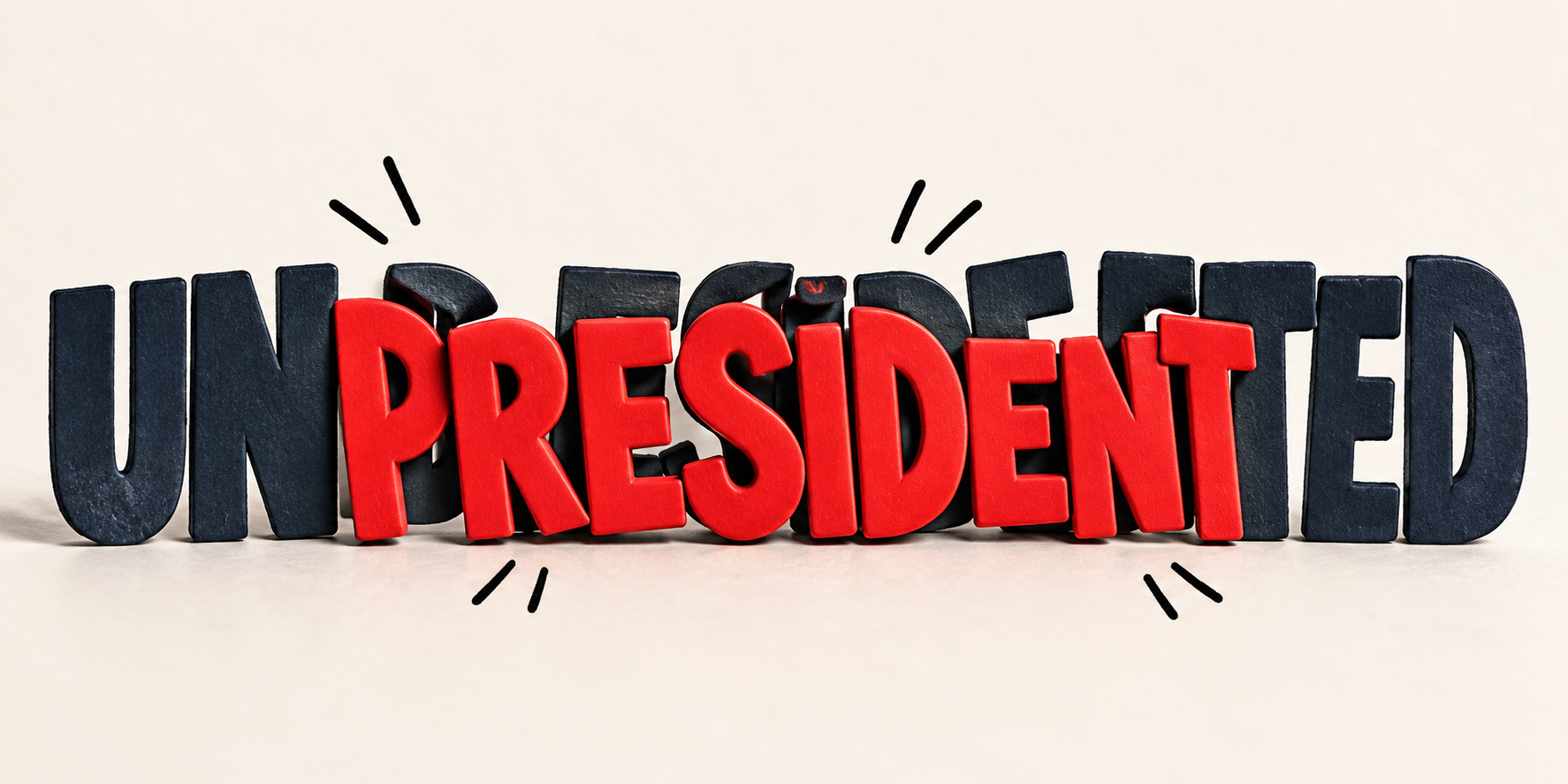
I keep hearing a new word:
"Unpresidented."
Or at least that's what it sounds like.
The word is, of course, unprecedented. Something that has never happened before. And if there's one word that's had plenty of exercise over the last decade or so, it's this one.
Political upheaval. Pandemics. War, genocide, death and destruction. Record temperatures, floods and increasingly extreme weather. And now increasingly apocalyptic predictions about artificial intelligence. Apparently, we are living in unprecedented times.
This is not a new word
The word itself isn't remotely new. Google Books shows it being used for centuries, with its frequency rising substantially in modern English. But somewhere along the way, something interesting seems to have happened to its pronunciation.
Listen carefully and you'll hear plenty of native English speakers saying something remarkably like:
un-PREZ-i-dent-ed.
President.
I hear it constantly. Presenters on the radio say it. Callers say it. Friends and neighbours say it. And in the clip accompanying this article, a BBC reporter at the World Cup — someone who speaks for a living — says it too.
BBC reporter: “The concern is that FIFA’s action could set a president.”
England manager: “Where does this start and where does this end?”
Was Thomas Tuchel talking about the FIFA president’s action, or the increasingly widespread mispronunciation of precedent?!
And here's what I find particularly interesting: an English learner may actually be less likely to make this mistake than a native speaker.
There's a president hiding in unprecedented
If you've learned unprecedented as a vocabulary item, perhaps you've seen it written down, looked it up and consciously learned how to say it. Most native speakers haven't. Long before they became familiar with unprecedented, however, they knew another extremely common word:
president.
The words look tantalisingly similar. But they don't contain the same sound in the middle. In standard pronunciation, unprecedented has the unvoiced /s/, not the voiced /z/ of president.
So I suspect something wonderfully human is happening. Faced with a relatively unfamiliar word, the brain reaches for a pattern it already knows extremely well. Children do this all the time. They impose familiar patterns on unfamiliar language. Adults aren't immune. And once enough people start pronouncing words in a particular way, we hear it from one another. Something that initially sounds odd gradually starts to sound normal.
I can't prove that's what's happening here. But once you start listening for unpresidented, it's remarkably difficult to stop hearing it.
And then Donald Trump made it even better
In December 2016, Donald Trump accused China of seizing a US Navy drone in an:
“unpresidented act”
He didn't just pronounce it that way; he wrote it that way.
The tweet was deleted and corrected, but the mistake was so beautifully appropriate that The Guardian promptly nominated unpresidented as its word of the year.
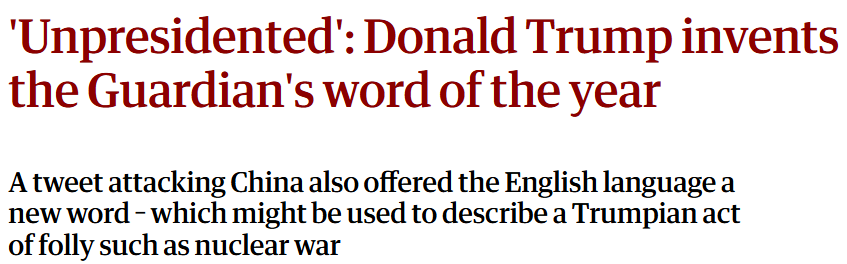
So a man whose presidency would repeatedly be described as unprecedented had accidentally created unpresidented before he'd even become president.
English occasionally writes its own jokes.
Could unpresidented actually become a word?
For now, if you're learning English, stick with the /s/.
But languages don't ask permission before they change. Today's mistake can become tomorrow's variant and sometimes, eventually, the form everybody uses. English speakers reshape unfamiliar words all the time, often pulling them towards words or patterns they already know.
Could president eventually do something similar to unprecedented?
Probably not.
But the interesting thing is what the mistake tells us. Native speakers don't carry perfect dictionaries around in their heads. We predict, recognise patterns, mishear and reshape language too. Which means an English learner who carefully learned unprecedented from a dictionary may sometimes pronounce it more conventionally than the native speaker presenting the news.
And if unpresidented ever does replace unprecedented?
Well, that really would be unprecedented.